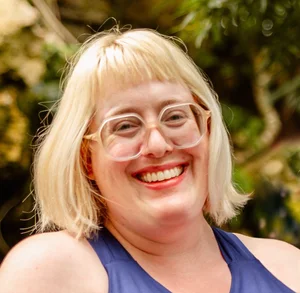
Fiona Lovejoy ’26
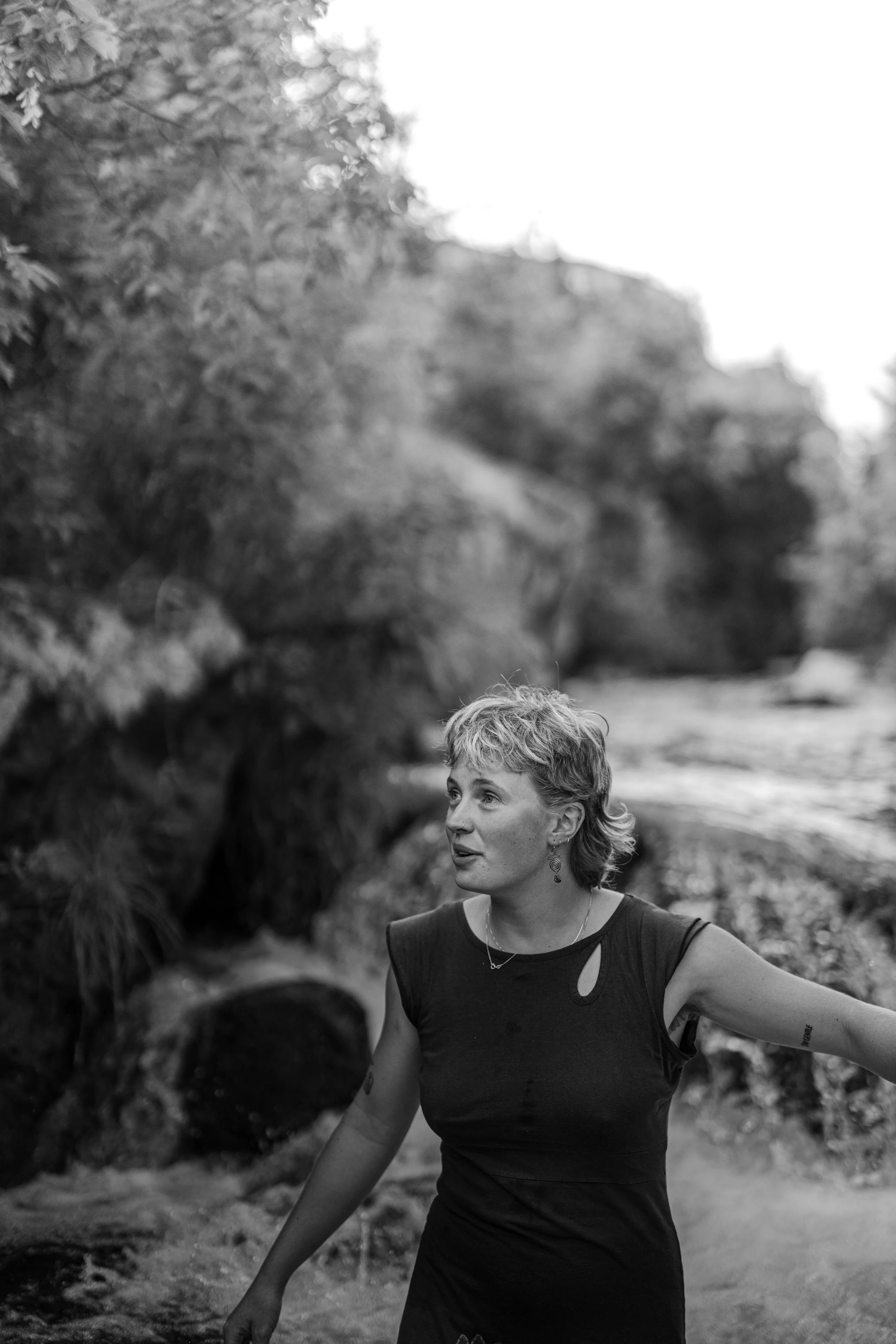
By Fiona Lovejoy ’26
In the fall of 2021, having deferred my acceptance to UVM, and frankly feeling disillusioned with higher education, I found myself WWOOFing* in Flying Pond, Maine, and got the chance to tour COA. It being winter break, the campus was empty and it was as if no one but my tour guide, Olivia Camber (formerly Clark) ’24 and I existed there. Nearing the end of the tour, she led me down towards the ocean where we bumped into her friend (and mine, in the future), Antoine. Walking side by side the two of them, still basically strangers, I somehow had already begun to feel at home. When I got back to Flying Pond, I immediately began my COA application.
I chose to study at COA for a number of reasons: because of the opportunity to craft my own educational path instead of subscribing to a binding, rigid major; because of the intrigue of human ecology, and what I hoped I’d come to understand it to be four years later; because of that frigid day in early November 2021, and because of the tenacity, vibrance, humor, integrity, dedication to craft, boundless curiosity, and truly inordinate generosity of the people that choose to intertwine themselves with this place.
*WWOOF: World Wide Opportunities on Organic Farms, a network of national organizations that facilitate homestays on organic farms
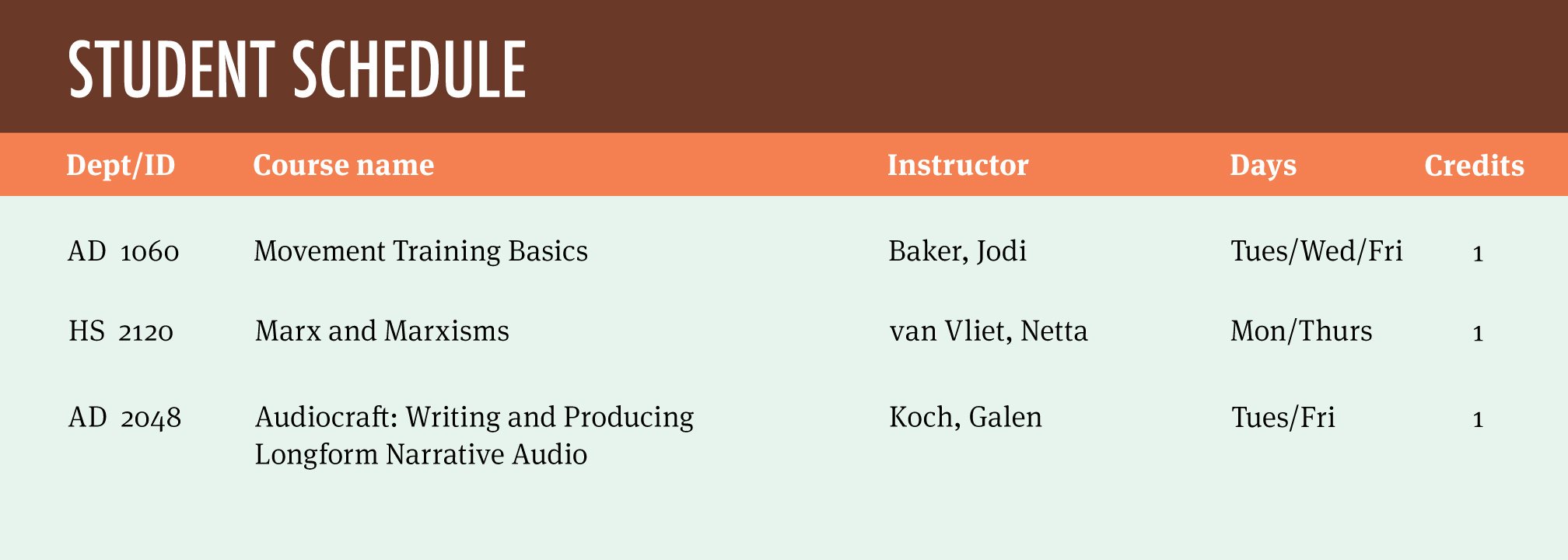
Movement Training Basics
This class, taught by Jodi Baker, pushed all the movement training I’d done in my life and at COA into concise focus. The most incredible part is that we hardly ever spoke. I learned about the importance of repetition, rules, and exactness walking in circles and circles and circles with Jodi barking out directions. We, a group of individuals, learned about taking action, following desire and impulse, and responding by passing balls—large and small—across space to one another. I learned and practiced soft focus and a neutral stance. I learned to take these postures with me in and out of the studio. My daily life became a practice in movement training. Nearing the end of term, we took a trip to Ellsworth’s candlepin bowling alley (featuring the oldest candlepin machines in the world. Let that sink in) to apply all that we’d learned in class to a new form. Training with Jodi helped me see where movement training and other theoretical disciplines intersect—allowing me to embark on my senior project, navigating concepts like nationalism and nationality, labor and exploitation, and gender and the body.
Marx and Marxisms
Marx and Marxisms, apropos to its name, is a deep dive into the vast and complex world of Marxist theory. Like most other classes taught by professor of anthropology Netta van Vliet, the course engages feminist and gender theory as well as postcolonial study, among other disciplines, to chart intersections of political economy and difference, marginalisation, and the class struggle. The class was focused on the development and rise of capitalism, and the various and continued Marxist responses to that socioeconomic and political structure.
This class gave me the tools not only to read and engage with difficult and complex text, but strengthened my ability to contextualize myself inside of larger structures, bringing myself into pre-existing discussions. By the end of the course, I felt that I finally grasped what I couldn’t at the start—that learning is not about finding answers, but asking hard questions and trying our best, not to resolve them, but to create more of them.
Audiocraft: Writing and Producing Longform Narrative Audio
Audiocraft, taught by sound and story archivist Galen Koch, is a practicum in long-form narrative storytelling. We began the class creating three short, prompted warm-up pieces which gave us the opportunity to get comfortable working in Logic Pro. After that, the term was largely dedicated to personal work on a 20-minute story. Given the freedom to create whatever I desired, I decided to produce a story about kinds and acts of love. I wanted to chart the myriad ways that peers, professors, and strangers alike navigate loving in times of deep pain, worry, and general hardship. What I ended up with was the story of a mosaic maker and a chance love story between two Londonites far, far from home. It was a journey into weaving what seemed like very distant stories into one, an experience I have had over and over again at COA.