
Maine Beer Company raises a glass in support of Allied Whale
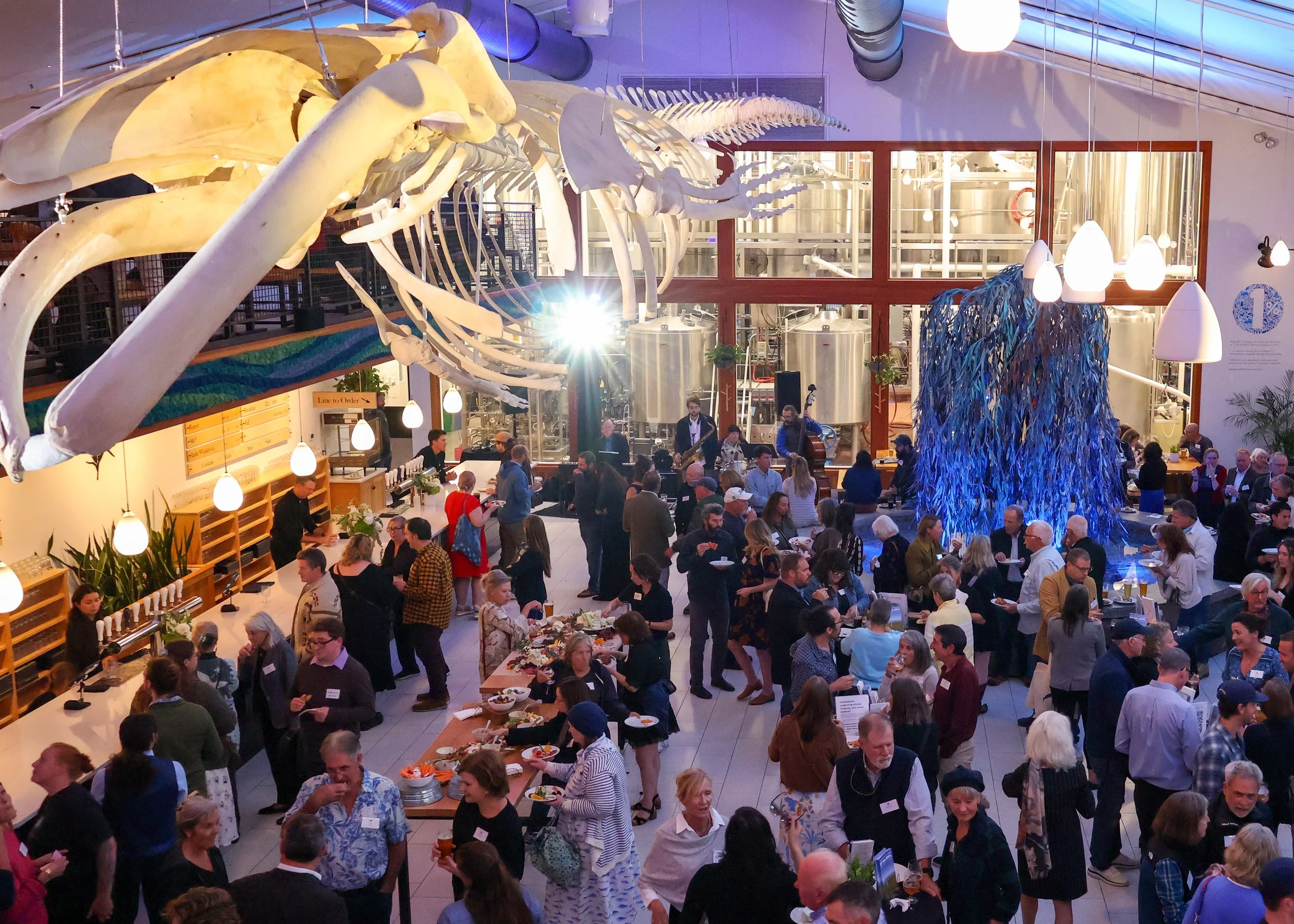
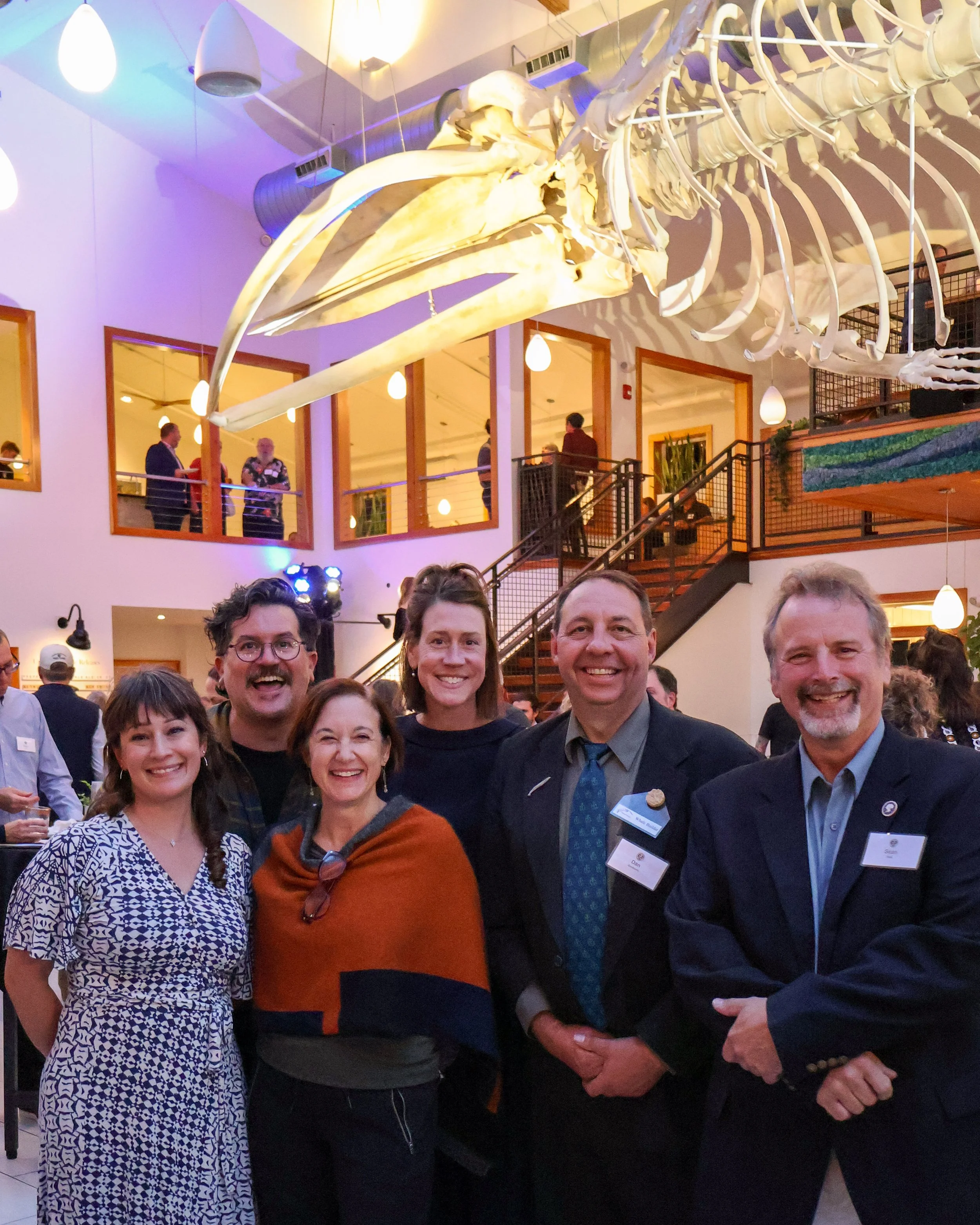
Maine Beer Company (MBC) hosted a gala celebration at its Freeport tasting room on an early-fall evening to mark the installation of a 53-foot fin whale skeleton and to raise support for College of the Atlantic Allied Whale—the NOAA-authorized responder for marine mammal strandings from Rockland, Maine, north to the Canadian border.
The preparation, articulation, and installation of the whale skeleton, “Finny,” was led by COA Research Associate Dan DenDanto ’91, founder of Whales and Nails, a Maine-based company that prepares and articulates whale skeletons for museums and educational settings. The project was completed in close collaboration with Allied Whale, with hands-on involvement from COA students and alumni.
The unveiling doubled as a reminder of what long-term community partnerships can make possible. MBC paired the celebration with an Evening Benefit for Allied Whale, directing proceeds and ongoing support to the field research, education, and response work that COA students, staff, and faculty carry out to better understand—and protect—Maine’s marine mammals. Permanent interpretive signage installed with the display now tells that story to thousands of annual visitors: how learning at COA connects directly to real-world conservation work, and how a mission-aligned partner can help keep that work thriving.
Speakers included MBC Co-Founder Daniel Kleban, Allied Whale Director Sean Todd, COA President Sylvia Torti, and US Representative Chellie Pingree ’79 (D-ME-1).
Over 16 years of partnership, MBC has contributed more than $173,000 to Allied Whale in support of marine science and conservation. MBC is a certified member of 1% for the Planet, a global network of businesses that commit at least 1% of annual sales to environmental causes—an affiliation that reflects strong alignment between MBC’s sustainability mission and COA’s human ecology framework.
At the event, MBC announced a $50,000 gift to support Allied Whale’s North Atlantic Finback Whale Catalog, a long-term photographic identification database using a photo-ID process pioneered by Allied Whale researchers. Using high-resolution images of dorsal fins, scarring patterns, and pigmentation, researchers track individual whales over time, contributing to population monitoring, migration analysis, and conservation science.