Of potlucks and yogurt-covered pretzels
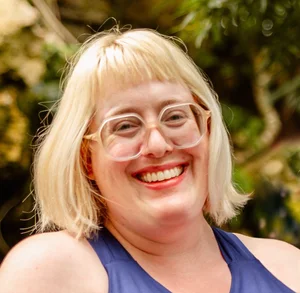
2019 commencement speech, edited for length: student perspective by Ky Osguthorpe ’19
It’s not that I didn’t like potlucks—it’s more that I didn’t come to COA expecting them to be the main social events of my college experience. I hadn’t prepared myself, didn’t know how to cook at the same level as my potlucking peers. I started bringing Hannaford-brand, yogurt-covered pretzels to potlucks. It became my thing, my contrarian radical stance to potlucking… That is, until the day I rolled up to a potluck and someone else had brought the same yogurt-covered pretzels. I was no longer radical.
We use the word radical a lot here at COA. This place, we like to say, began as a radical experiment, a push-back against an educational system that silos learning into disciplines. Our radical opposition served as a defining point in our early years. But in the years since, things have changed. Interdisciplinarity is no longer an outlier pedagogy, many schools consider themselves green, and self-directed learning has become a cliched phrase.
While we spent the past decades pushing back against the world, the world came closer to us. The world brought pretzels to this collegiate potluck. But that was OUR thing! So maybe we need to ask ourselves: What does it mean to be radical when you are no longer special, or no longer unique in your radicalness? If we’re not radical in juxtaposition, can we still be radical… at all?
One of the most memorable educational experiences I’ll take away from COA—one that maps the shape of my education as a human ecologist—happened on a trail behind the Bass Harbor Lighthouse. John Anderson took us to the same landscape that had been the basis for a seminal piece of ecological research conducted by an esteemed academic some 70 years earlier. We set out with our ecology notebooks for a walk through the forest, the class trailing behind John and Charles Darwin, John’s dog.
We followed the two of them down a wide path for some time before John, approaching the edge of a wooded area, suddenly, and without explanation, left the path. My confused class tentatively followed with no small degree of reluctance, until he sat down at the base of a gnarled old tree.
John then did something radical. He asked us what we saw.
The tree John was sitting beside was not the kind of tree the esteemed ecological authority of 70 years prior had documented in his study. It was an apple tree, and its very existence in that place cast doubt on the supposed expert’s characterization of the landscape. We bore witness to this with our own eyes and were encouraged, in that moment of teacher, students, and log, to show up to our education as living, breathing individuals with eyes and beating hearts and the responsibility of questioning authority.
It was not a gentle lesson. It was an elbow to the ribcage telling us something we’d be told eight million times at COA: that we’d better pay attention when we were getting uncomfortable. Because it meant we were about to learn something.
It will always be uncomfortable to participate in the kind of learning that demands authenticity of its students, that says sometimes authorities don’t know shit and that you, with your eyes and ears and nose and hands, do. But in the end it’s up to the “I.” The viewer, maker, doer. That’s the kind of learning we do here at COA.
It’s radical because it’s authentic. The first-person perspective of our work and words subverts the world that asks us to be unbiased, objective, dispassionate, and distant.
To my fellow graduates, I love you, you ARE radical, but you’re not unique. Not here, not on this campus. Because this is the very core of what we have been doing here: getting an education in subversive vulnerability.
It’s not something we are necessarily aware that we have been doing—not even something we may have sought when we showed up on these shores. But here we are, in our last hours, raw and authentic, about to go out into the world in the only way we know how: radically.