
PROGRESS
By Sam Miller McDonald ’09

This piece originally appeared in Progress: How One Idea Built Civilization and Now Threatens to Destroy It, St. Martin’s Press, 2025.
Whether or when progress can be shown to have occurred depends entirely on when measurements start and end, where the lens is focused, how those measurements are conducted, and what data researchers choose to include or omit. Sometimes what appears to be progress in technology is actually just the solution to a new problem caused by some other technology that falls outside the scope of a given study, while progress in justice and civil rights may be but a slight improvement on conditions that were not natural or eternal, but were newly created horrors at the beginning of the time period under consideration. Grand narratives of progress begin to break down when you look closely at them. It soon becomes clear that they instead often serve more cynical purposes.
This faith, that history moves progressively, is at the foundation of my own upbringing. My parents have engaged in lifelong battles to improve the world they inherited, with an earnest urgency one sometimes finds—for better or worse—in US Midwesterners, which I could not help but absorb. They’ve protested in Washington, DC, they’ve volunteered for local and national candidates for office and for local and national organizations. They obviously do not believe progress is natural or inevitable. They believe you have to fight for it. And they instilled in me a deep-buried belief in the possibility of societal progress: of the value of participating in collective action movements to do whatever one can to make life better for other human beings and for all the other creatures that share the one planet known to house life. Some of my earliest memories involve attempting to decipher protest signs in the garage (“Keep your laws off my body”?) or accompanying my mother to envelope-stuffing gatherings for a local politician. I began attending rallies and protests in my teens, seeing both the heart-fluttering power of hundreds of thousands of voices ringing together and the cold terror of kids being beaten bloody by riot police. Growing up among wild habitat in northern Michigan, I felt more at home among forests and hills than anywhere else. Seeing firsthand the destruction of beloved places, I have felt deeply committed to wilderness protection. After years of participating in activism and becoming disillusioned with its lack of success, I have lately been focusing on scholarship and public writing. It is this combination of experiences and a desire to contribute to meaningful change that turned my eye toward the idea of progress itself.
Studying progress as a cultural artifact and its connection to material systems, like economies and ecologies, is not straightforward. It is interpretive and, given the importance and complexity of the idea, must be approached from multiple angles. I set out to study this phenomenon first through the lens of my area of expertise, geography. From the Greek γεωγραφία, combining “earth” and “writing,” integrated geography is the study of how ecological systems interact with human systems through space and time. It is an inter-disciplinary field, and as such I have approached the subject with the tools of multiple disciplines. Progress as a narrative formula that shapes the identity and priorities of cultures can only be understood this way, by understanding not only the culture itself, but also the ecological context in which that culture exists and is shaped.
As I began going through documents, reading books on the idea, thinking through my own relationship to these assumptions, it became clearer that the narrative infrastructure that I took for granted did not necessarily reflect history and reality. What if, I wondered, these progress narratives were not just wishful thinking, not just a human tendency to yearn for hope and paradise, but were active forms of propaganda? What if this narrative was itself a rhetoric deployed for political ends, like conquest and control, as a perverse obstacle to actually achieving progress? And, further and more subtle, though we can easily identify such propaganda when political opponents deploy it, is it possible that seemingly virtuous ideas of progress can be just as corrupt, just as wedded to systems that ultimately undermine their own stated goals?
Setting aside debates around past instances of progress for now—we will come back to those later—it is very clear that whatever genuine claims can be made to improvements in the twentieth century, most or all of these are rapidly disintegrating in the twenty-first, as a direct result of that success.
Thanks to the explosion in fossil energy deployed in the last hundred years, atmospheric greenhouse gases are causing temperatures to rise more rapidly than at any other time in human history, with cascading impacts and feedback loops like increased droughts, wildfires, floods, sea-level rise, the melting of permafrost, glaciers and ice caps, ocean acidification, forest diebacks and desertification, heat waves, and more. As a result of the widespread expansion in use of synthesized chemical compounds in the Great Acceleration, other forms of airborne, waterborne, and soilborne toxic pollution are proliferating at increasing rates. As a result of skyrocketing human populations and the necessity for increased food production and housing during the last hundred years of growth, deforestation and habitat destruction are driving massive terrestrial extinctions, while overfishing, pollution, and hotter temperatures are bringing about the collapse of marine life. Since the 1970s, 60 percent of vertebrate populations have gone extinct. Two-thirds of tropical rainforests have been destroyed. Fish numbers have halved. The result of this? The extinction rate is hundreds of times greater than it would be without such pressures. Waste, too, is a growing problem: due to the invention of plastic and widespread single-use plastics, plastic waste proliferates across every region on the planet, reaching into the remotest parts of the globe, like the poles and sea floor; plastics are even found in human breast milk and blood.
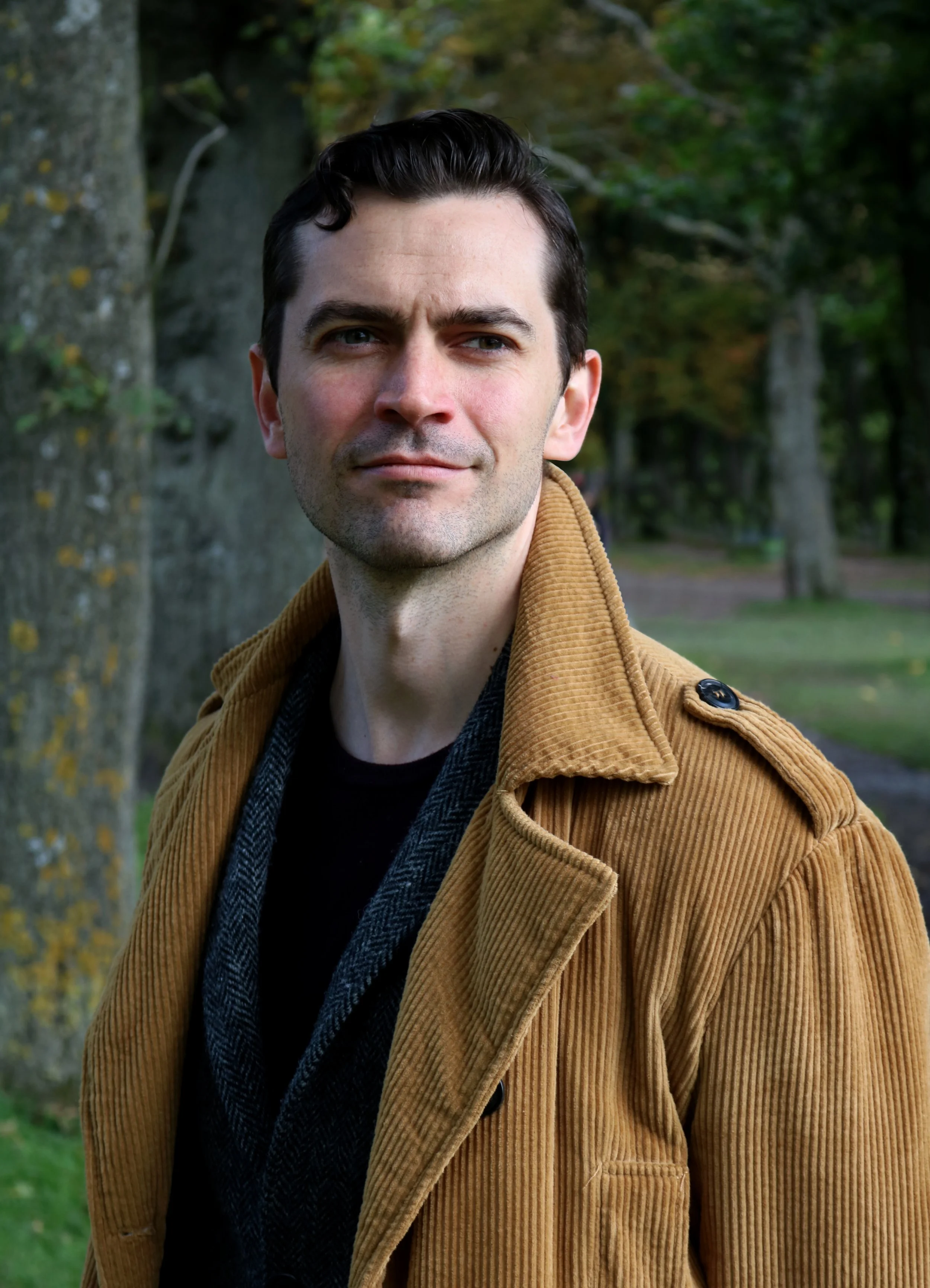
Sam Miller McDonald ’09
In part as a result of the destruction of the biosphere, and entirely as a result of the processes that drive that destruction, human welfare is worsening in a number of key areas: democracy is declining, economic inequality is increasing poverty and slums are a growing feature of urban life, global life expectancy is falling, maternal mortality for millennials is 300 percent higher than for their parents’ generation, new infectious diseases are rapidly increasing in reach and number, social trust in institutions and individuals is decreasing, the rate of economic instability is growing and socioeconomic mobility falling, along with other general well-being indicators in aggregate. In short, nearly everything is dying or degrading. By the time you read this book, such conditions will undoubtedly be worse. That is not a pessimistic assumption, but simply a realistic assessment based on all trend lines in these areas. What had appeared to be indicators of progress in human well-being during the twentieth century—greater equality in wealth distribution, rising well-being indicators, or environmental regulations, for instance— may be little more than a brief blip, at best: a quick flash resulting from all the energy that also ignited the Tsar Bomba, skyscrapers, and space shuttles.
By coincidence, on the day I wrote the first version of this paragraph—Monday, November 14, 2022—I went in search of the current number of living human beings on the planet, and on that day, the number passed the 8 billion mark. It was 3 billion fewer when I was born in 1986. Between 2018 and 2023, 400 million people have been added to the total count—net, meaning that the number accounts for those who have been subtracted. That’s adding more than the total population of the United States to the Earth in five years. The last time the total number of human beings declined is estimated to have been during the plague pandemic of the fourteenth century, which killed tens of millions. This means the world has seen nearly seven hundred years of a compounding increase in the total number of human beings. As I write in the early 2020s, there are 4 million cities and towns that house just over half of us. The roads on which many move could wrap around the planet thirteen hundred times. To feed us, about 37 percent of the planet’s land is covered by farms, many of them intensive, and between one and three trillion individual creatures are hauled out of the oceans annually and slaughtered. Two-thirds of the world’s humans have access to the internet: mass digital networks of information, communications, and markets. More than three-quarters can read words generated from among this planetary sea of human neurons. The anthroposphere has never been so vast. The biosphere has shrunk proportionately. Biomass is the total amount of biological material that makes up the living bodies of organisms. The biomass of wild mammals accounts for just 4 percent of all the mammals in the world. This means human biomass makes up more than eight times that of wild mammals, while domesticated mammal biomass is more than fifteen times greater than wild mammals. In 2020, the total mass of all animals was 4 gigatons. The total mass of plastic was more than double that, 9 gigatons. That proportion will have grown larger by the time you read this. The mass of humanity’s built environment—the stuff of Jefferson’s as yet most improved state—is greater than all life on the planet, all plants, all animals, all bacteria, everything, which means all known life in existence. The destruction of biodiversity is the sixth mass extinction that researchers know about in Earth’s history, and the first since 66 million years ago when what was likely an asteroid strike shrunk the planet’s biodiversity and ended the age of dinosaurs. There is an unknown and unquantifiable probability that today’s extinction event could end up being the worst in life’s 3.7 billion years on the planet—in all the universe, as far as we know— and could make us extinct along with much else. There is nothing more evil, nothing more horrific or important to avoid, than a situation in which the one planet in the universe known to house life is made inhospitable to most life.
Never before have so many lives, human and otherwise, depended on the immediate decisions of human beings.