McGhee Steiner ’27
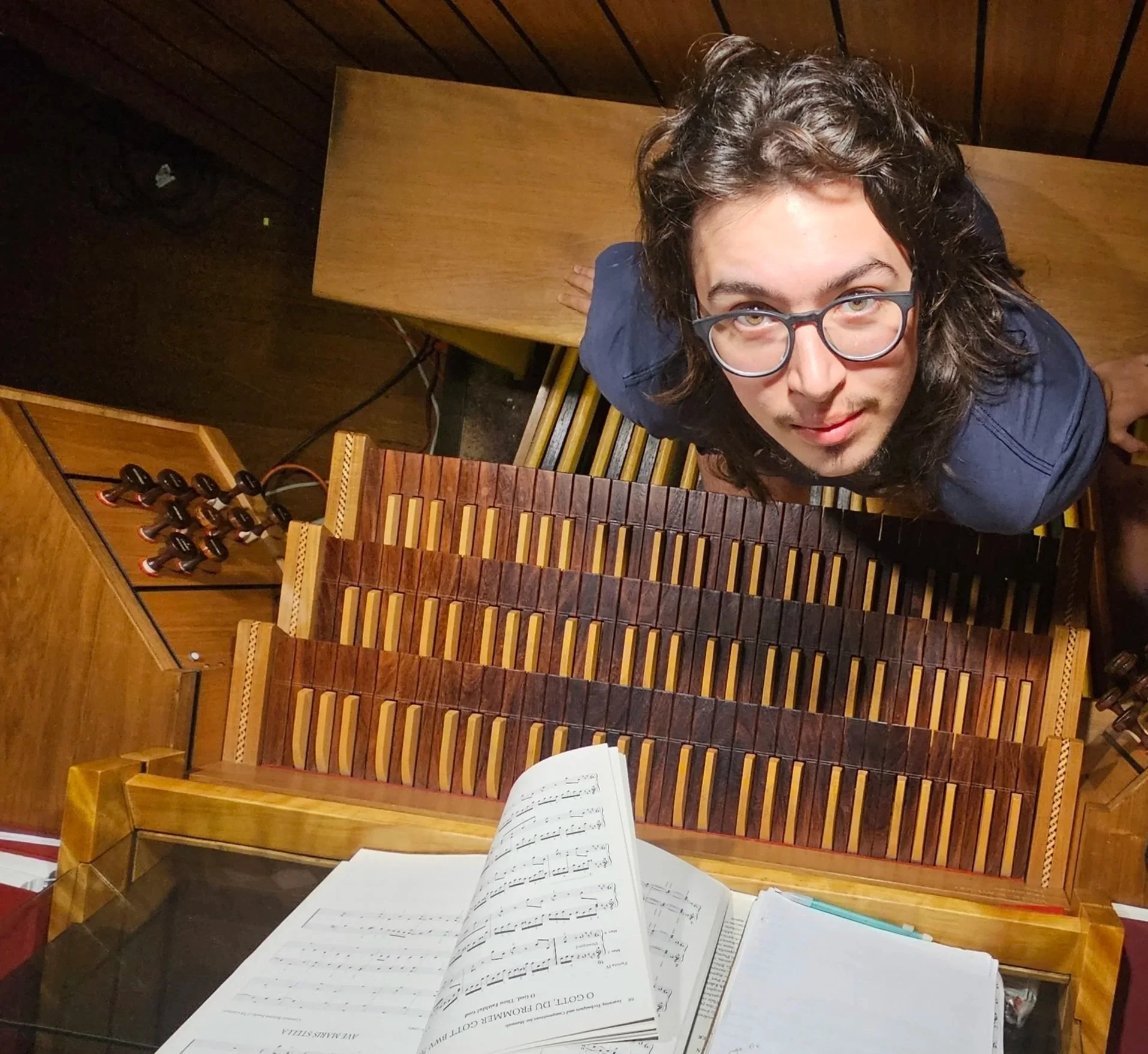
By McGhee Steiner ’27
When I transferred to College of the Atlantic, I was looking for the queerest institution of higher education I could find. I was looking to share in the nurturing environment that this small, warm, and intensely applied community provides. I trusted that I could wield the strikingly open curriculum in such an inspiring and supportive environment. My time at COA so far has affirmed my trust, and I find myself equipped to weave together my many and multiplying interests into a meaningful academic program.
In my first year at COA, I discovered that the traditional sit-down classroom could not contain me and that my work had to be physically engaged. During the fall 2025 term, I focused my pursuits on sacred music, bridging my passion for music with my curiosity for spiritual communities and practices.
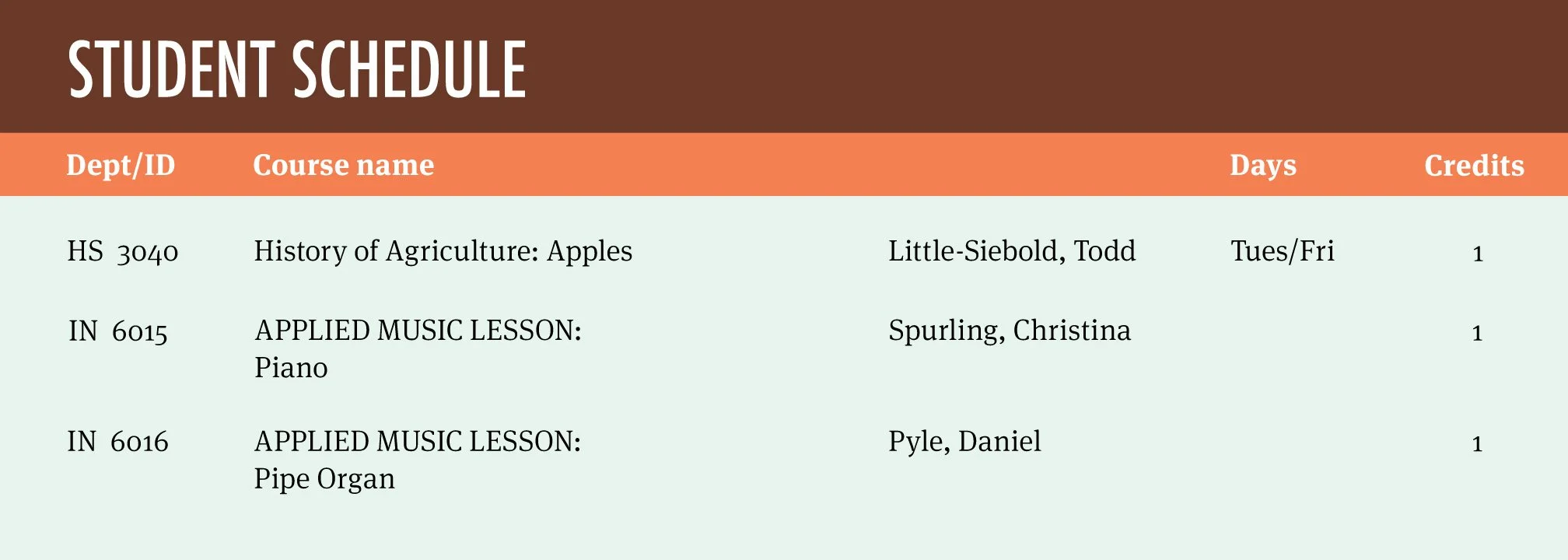
History of Agriculture: Apples
One of the first things I heard through the COA grapevine (or should I say apple tree) is that if you have the chance to join the Apples class, you have to take it. Todd Little-Siebold passionately led our class on countless field trips to orchards, cider mills, and apple events, and through thoughtfully organized readings and discussions. A deep dive into everything apple—from the genetic background of Malus domestica, to the process of grafting scionwood, to tasting more apple varieties than I knew existed, to the role of the apple in early American history—placed me in a more intimate relationship with the land and her literal and metaphorical roots, scars, seeds, and fruits. For my final research project, I created a watercolor directory of ten different apple varieties growing off neighbors’ trees in downtown Bar Harbor in the style of the historical USDA Pomological Collection. In ways from befriending my neighbors over their apple trees to brainstorming the role of apples in improving local food systems, this class ultimately changed how I walk down the street.
Piano
I set out to develop and perform a lecture recital of Claude Debussy’s first book of Images. This stunning piano suite was the last piece I had tried to play, and had given up on, as a burnt out conservatory-track musician in high school. After years of growth away from the piano, I rediscovered this piece as a newly possible, but still daunting, task. Through the private lesson format of the AML, I was graced with the specialized guidance of local piano instructor Christina Spurling. I was able to embed myself in a study of Images that collaged its musicological context, harmonic imagery, and mechanical use of the full grand piano with its contemporary situation and my personal story. I shared this joyful work with both the COA and wider community in two public concerts.
Pipe Organ
Through weekly private lessons with local organist Daniel Pyle, I began formal training on the organ, an extensive instrument that strikes me as both a key window into the world of sacred music and an infinitely exciting logistical and tactile matrix. I laid the foundations of accurate and efficient movement of every part of my body to accomplish the specific choreography required for organ playing. The organ also provided outlets for my imagination and personality. As an aspiring church musician, I was elated to learn history, music theory, and even topics in anatomy and physics that worked together to enrich my engagement with sacred music.