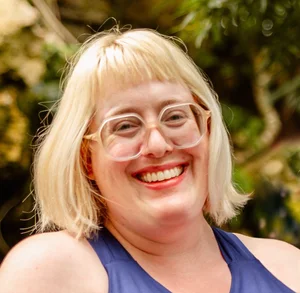
Rosanne Mason
Black Fly Society, Northern Light Society, and Champlain Society member
By Amy Morley
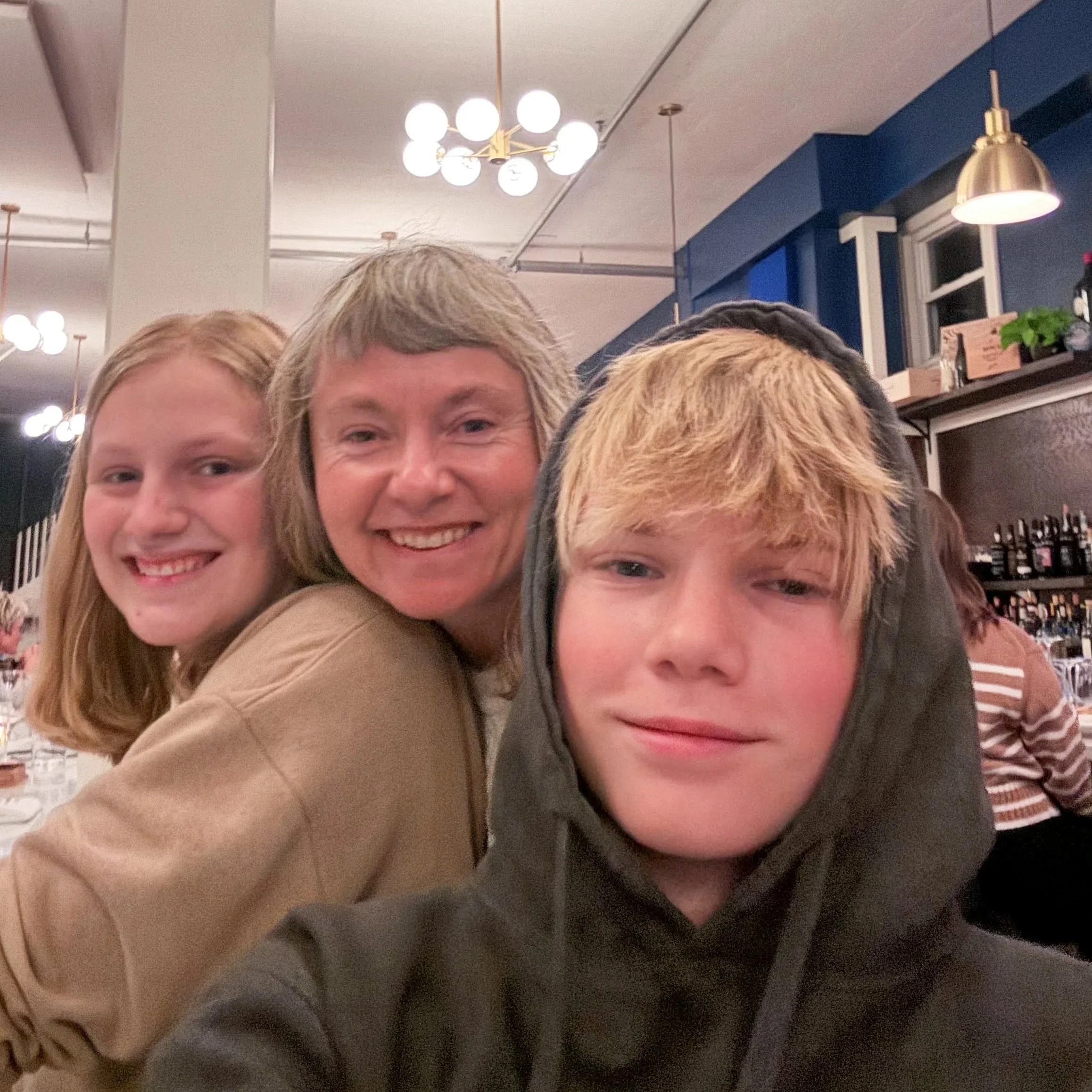
Ruth ’29, Rosanne, and Jack Mason at Brasserie Le Brun in Bar Harbor, owned by Michael Boland ’94
Rosanne lives in Colorado, and when her daughter Ruth (class of ’29) began looking at colleges, neighbors who often spend time in Northeast Harbor, on Mount Desert Island, encouraged her to consider College of the Atlantic. They described it as a special place for unique students. After visiting, Rosanne understood exactly what they meant.
That visit coincided with the creation of Road Line, an installation by renowned environmental artist Andy Goldsworthy. Goldsworthy’s sinuous wave of granite—constructed from traditional curbstones—winds 1,500 feet across the COA campus, bending away from the traditional straight curb and echoing the unique, non-linear paths that students chart at COA. Road Line is Goldsworthy’s first permanent installation in the State of Maine.
Rosanne and Ruth had long admired Goldsworthy’s work through the documentary Rivers and Tides. Seeing his lyrical art on campus felt serendipitous. “Mom, it’s Andy from Rivers and Tides,” Ruth said. For Rosanne, it felt like confirmation: This was a place where art, science, landscape, and learning were inseparable.
Rosanne has been particularly struck by the physical and intellectual environment COA provides. Touring the Davis Center for Human Ecology—flooded with light and framed by an expansive, ocean-facing window—she contrasted it with her own chemistry lab “in a dark basement.” The message, she felt, was clear: COA is investing in how students learn. “They’re doing something right,” she says.
Since enrolling, Ruth has immersed herself in COA’s hands-on, place-based approach to learning. She is drawn to human ecology, environmental field studies, and social justice. She also loves theater and the opportunities at COA to perform and collaborate. She kayaked the Maine coast during her Outdoor Orientation Program trip and quickly found a close circle of friends who share her energy and intellectual curiosity. At home in Colorado, Rosanne read the Human Ecology Core Course book, The Avian Hourglass, alongside her daughter, staying connected to the questions shaping Ruth’s education.
That confidence extends to COA’s leadership. She speaks of her trust in COA’s direction and in President Sylvia Torti’s leadership—transparent, thoughtful, and values-driven. During a recent conversation with our advancement team, Rosanne asked a straightforward question: “What type of gift does COA most need?” When she learned that unrestricted support provides essential flexibility, she readily agreed.
Her philanthropy reflects both trust and intentionality. In January, Rosanne pledged to join the Champlain Society in support of the Annual Fund. She also gives monthly through the Black Fly Society, directing her recurring gifts to the Field Stations Improvement Fund. In addition, she has made restricted gifts aligned with key institutional priorities, including the Campaign for Student Success—strengthening the information technology infrastructure that supports students from admission through graduation and beyond.
Looking ahead, Rosanne intends to include COA in her estate plans, a commitment recognized through membership in the Northern Light Society. For her, giving is about continuity—ensuring that the transformative experience she sees unfolding in her daughter remains accessible to future students.
“COA changes lives,” she says again. “I want to help make sure it can keep doing that.”
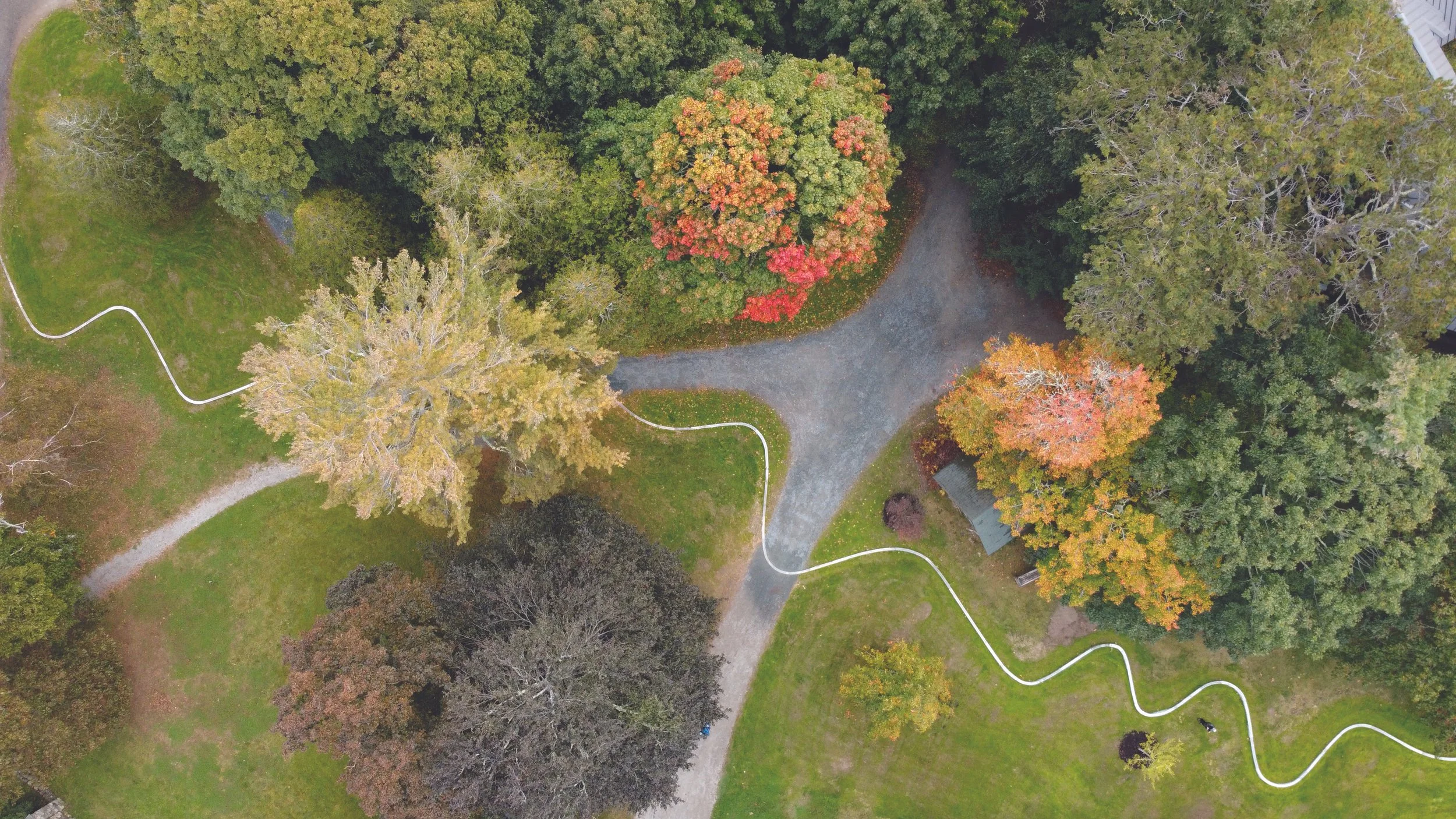
Andy Goldsworthy’s Road Line on COA campus. To learn more, visit coa.edu/roadline
The Black Fly Society recognizes recurring donors who provide steady, year-round support through monthly automatically recurring gifts.
The Northern Lights Society honors those who have included COA in their estate plans.
The Champlain Society celebrates donors who contribute $2,500 or more annually, whose leadership plays a vital role in advancing COA’s mission and sustaining its distinctive model of human-ecological education.