The way
Celebrating 25 years of Davis Scholarships at COA
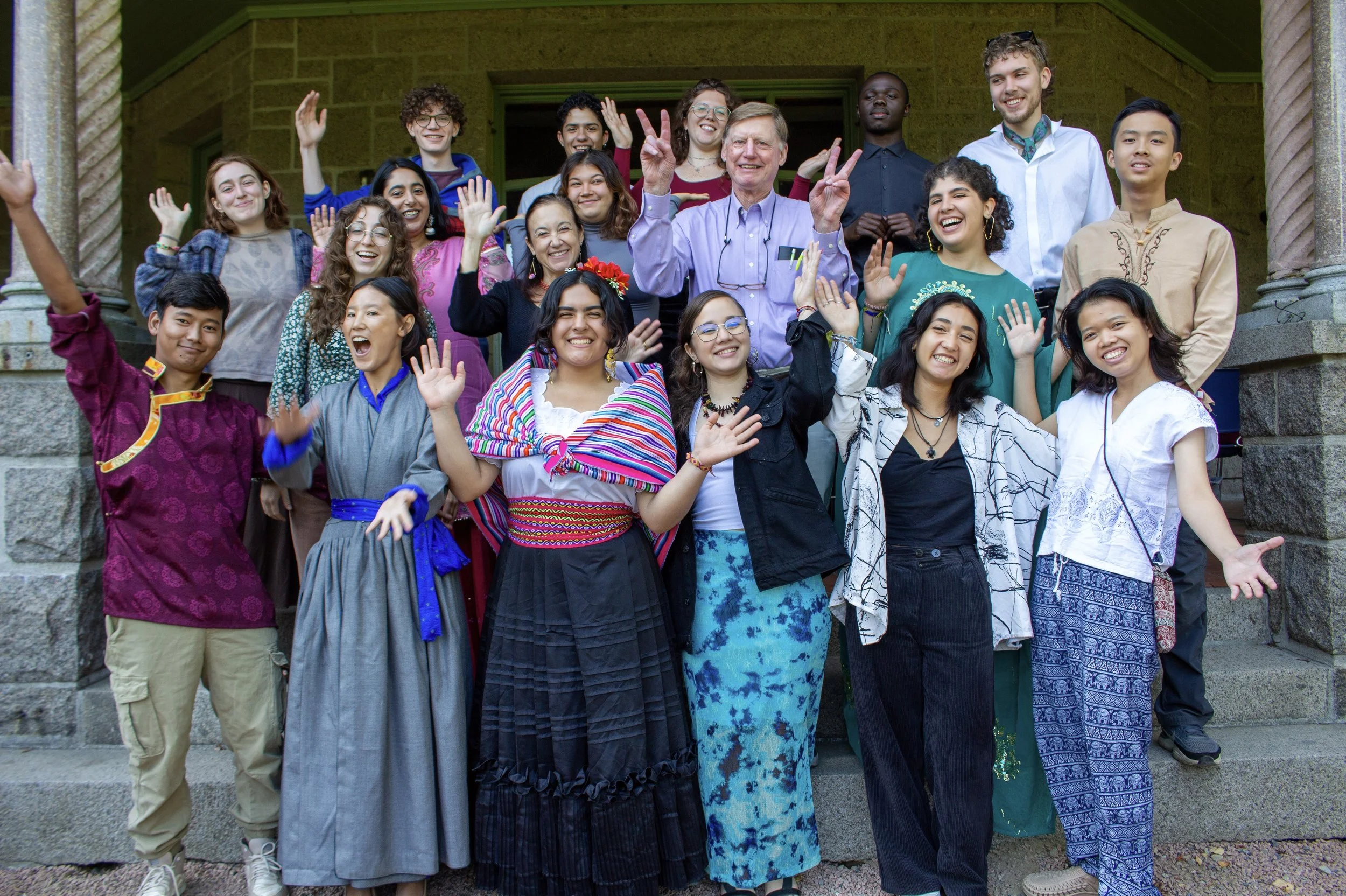
A group of first-year Davis United World College Scholars gather with program executive director Phil Geier at The Turrets for the annual Globe Ceremony
By Shir Kehila ’18
Opening an interview with a closed question may seem strange to some people. Generally, I would agree. And yet, I found myself asking every Davis scholar who agreed to an interview whether they would have been able to attend COA, or any other college in the US, if it weren’t for this scholarship. They all said some variation of “no.” I would have, too.
Co-founded in 2000 by philanthropist Shelby M.C. Davis and educator Phil Geier, the Davis Scholarship Program provides need-based financial aid to United World College (UWC) graduates—American and international—in partner US institutions. When it started out, the program had just five partner schools, COA among them, and 43 scholars. Last year, on its 25th anniversary, the program had more than 100 such partners and over 4,500 scholars. Its alumni count surpassed 15,000.
“The idea for a post-UWC scholarship,” Phil Geier wrote to me, “came about for three sequential reasons.” Then president of UWC USA in New México, Geier was confronted by the fact that, while UWC students were often admitted to American colleges and universities, they could rarely afford to go. Around the same time, Geier traveled with Shelby Davis—who had just expanded UWC scholarships for American students—to meet the recipients of these scholarships on campuses around the world. It was during this trip that Davis, impressed by the scholars’ non-American roommates and friends, got the idea for the program.
“Shelby and I viewed the end of the 20th century and the beginning of the 21st as a tipping point in international education,” Geier wrote, “an opportunity to help transform American campuses into more global communities and contribute to opening the eyes of all students and faculty to the benefits of living with and learning from difference.” So there was a need, a way to answer it, and the moment and means to do so: in collaboration, at the brink of a new millenium.
Andres Jennings ’08 had been a Davis Scholar before he came to COA. Originally from Santa Fe, New México, he grew up attending events at the local UWC USA, where he was once approached by a man in salmon-colored pants. “You should apply to these schools,” the man said to 15-year-old Jennings, then got up to the sound of applause. It was 1999, and Davis had just donated 45 million dollars to the school.
When Jennings next met Davis, he learned a life philosophy he’s been living by ever since. “I want you to focus on three things,” he remembers the philanthropist saying, “and I want you to dedicate 30 years to each.” The first, he explained, should be devoted to study, the next to money-making, and the last to giving it back.
“I regard my support for these students not as gifts,” Davis wrote, “but investments. I am investing in promising students from all over the world, with the hope of realizing major long-term returns in the form of a better, safer, and more peaceful world.”
The “learn, earn, return” philosophy guides Jennings in his day-to-day life, he told me. Now in the “earn” phase, he runs a sustainable tourism company in Porto, Portugal, where he lives with his wife, toddler, and trilingual five-year-old. He writes Davis annual email updates, feeling duty-bound to share his progress with the man who invested in not just four, but six years of his education. The man who saw him, alongside thousands of other young students, as investments worth making.
Like many Davis Scholars, Jennings first learned about COA from other Davis Scholars. Unsure what he wanted to study right out of high school, “COA made sense,” he told me. “It was a no-brainer.” Juliana Trujillo Mesa ’24 felt a similar way. She wasn’t just reluctant to choose a major, but also did not want to dedicate four years to any one discipline. And so, COA made sense to her, too. She did have some reservations, though, as someone “not genetically designed for winter,” as she put it. Her time in Colombia, India, and Brazil, where she spent a Global Citizen Year—another opportunity funded by Davis—did little to prepare her for Maine winters. What it did prepare her for was life in close-knit communities. Knowing she’d find one at COA, she told me, made the school “a no-brainer” for her, too.
The words “no-brainer” and “made sense” resonated, when it came to COA, not just because I heard them twice the same day, but because I’d felt the same way a decade earlier. COA seemed so aligned with the UWC movement, applying felt like a natural next step. But what made it worth the effort, on a fundamental level, was less the compatibility of values and more the availability of the Davis Scholarship. It was about the knowledge that, should I be admitted, I could afford to go.
Like Jennings, Trujillo Mesa attended UWC on a scholarship funded by Davis. “He got me through high school,” she said, “through a gap year, through college,”“I call you Uncle Davis,” she told him in 2024, at the [Champlain Society Reception] on campus. Likely, she isn’t the only one.
Trujillo Mesa first met Davis while still at UWC Mahindra, during the early days of Trump’s first presidency. When asked why he chose to offer scholarships only to US schools, where most UWC students were now hesitant to go, Davis explained it was his way to support both a cause he believed in and his own country. “The USA could use students like you,” Trujillo Mesa remembers him saying.
The more I thought about it, the more the scholarship itself seemed to be about reciprocity: about the relationship between students and schools, between people and the spaces they inhabit. It seemed human ecological in essence. It seemed like human ecology in practice.
Trujillo Mesa’s COA journey embodies this reciprocity. During her first term on campus, she co-founded The Antiracist Growing Space, a group whose online meetings were open to the community. Its creation inspired Trujillo Mesa to join the Diversity, Equity and Inclusion, Oversight, Accountability, and Research Team at COA. While working to understand the school’s DEI needs, members of the task force realized COA lacked a human resources department. The discovery led Trujillo Mesa to design an independent study in HR, join COA’s personnel committee, and, most recently, apply for master’s programs in HR. Like other Davis Scholars, she had to lead community-based projects, facilitate meetings, and speak in public at UWC, which prepared her, as she said, “to hit the ground running,” at COA. She wasn’t just ready to make the most of what the school had to offer. She was ready to help create what it didn’t.
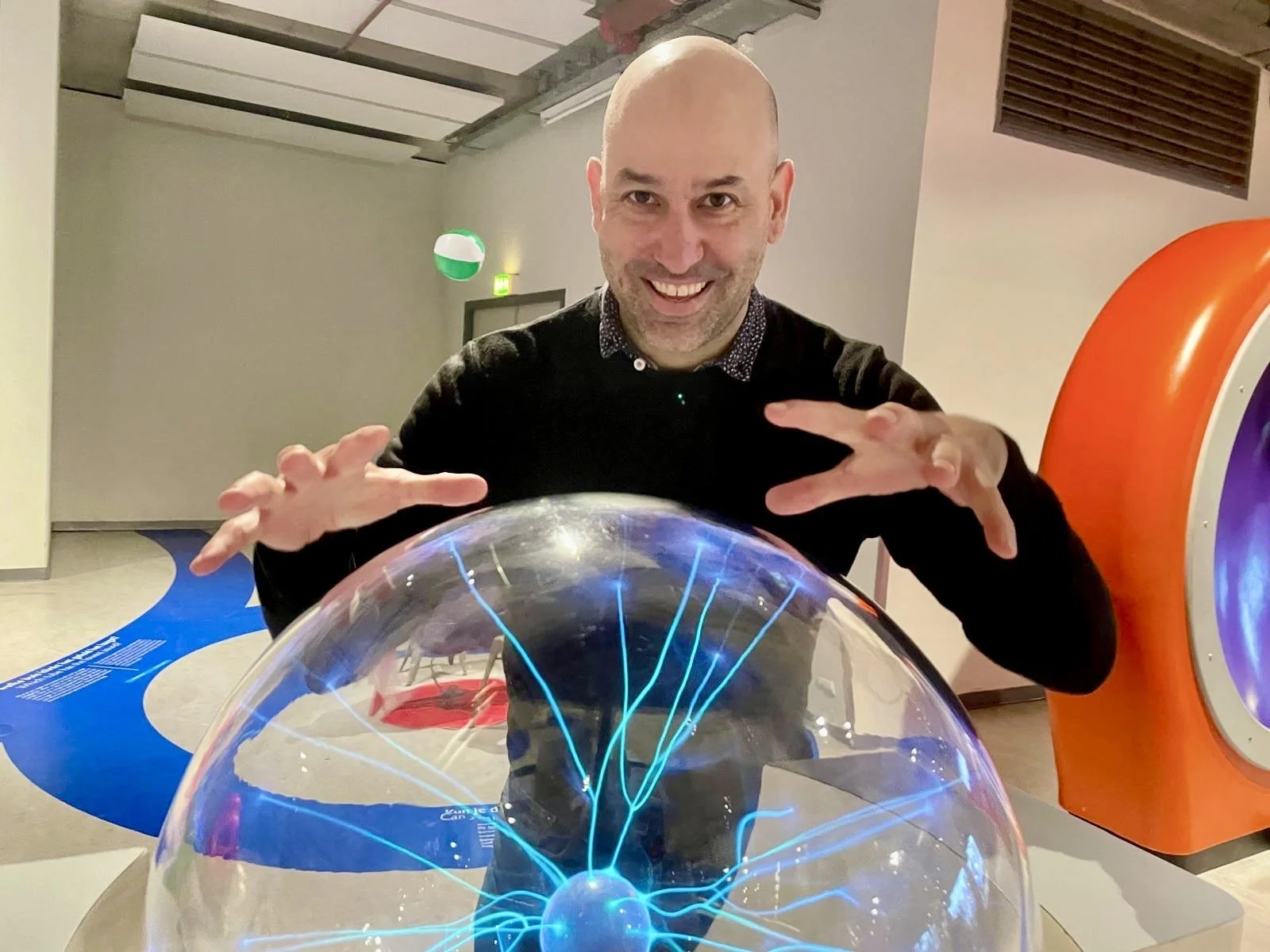
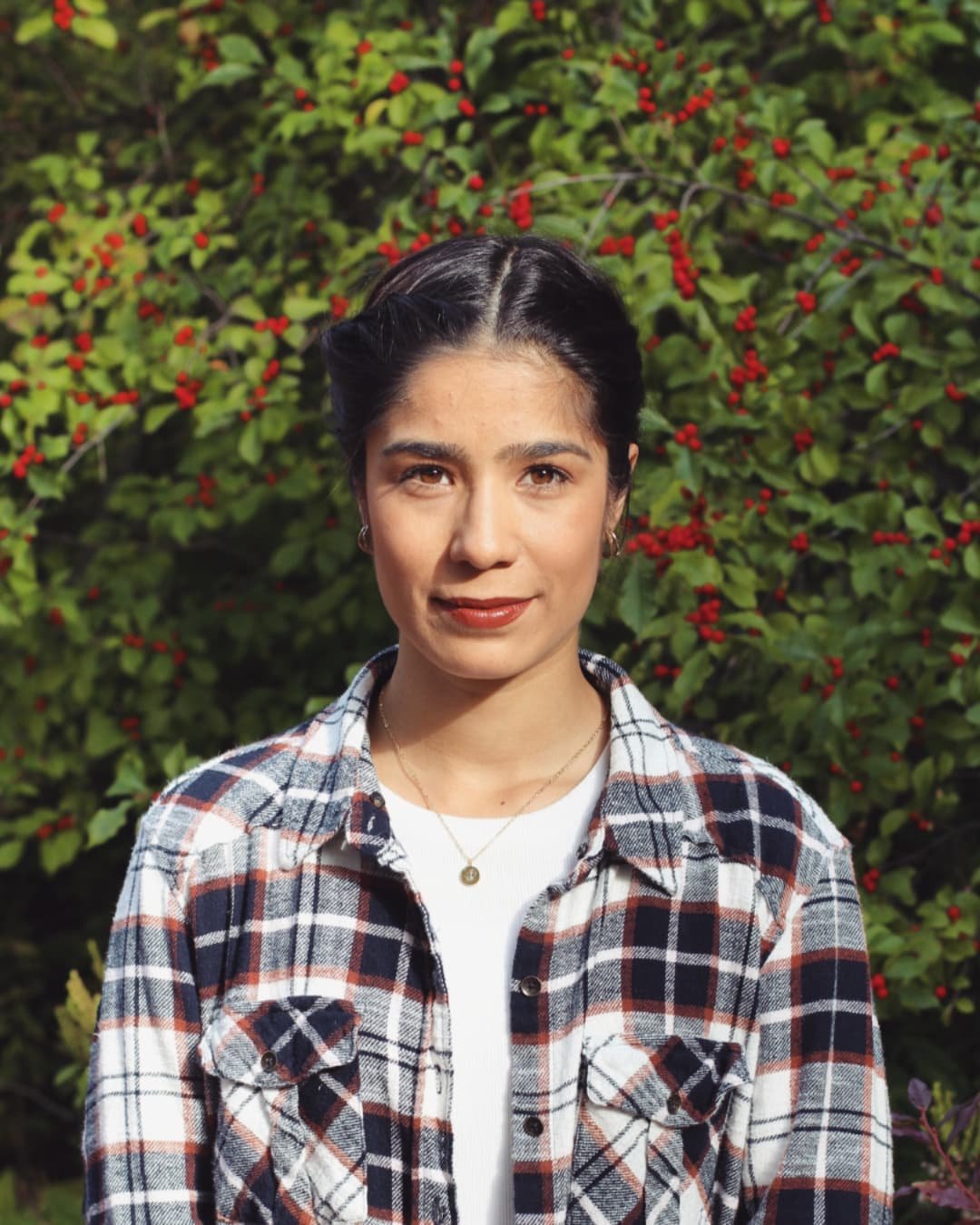
“I can attest to the intellectual engagement and sense of responsibility demonstrated by the UWC Scholars,” COA President Sylvia Torti said. “During my on-campus interview, some of the most thoughtful and challenging questions came from Davis Scholars.” And while it may be true that, as Andres put it, “COA wouldn’t have been what it is without Davis Scholars,” it’s also true that many of us wouldn’t have been where we are now not only without the Davis Scholarship, but without COA. “I’m a dramaturg because of [Joanne Woodward & Paul Newman Chair in Performing Arts] Jodi Baker,” Anna Parsons ’23 told me, “and an editor because of [COA lecturer and magazine editor] Dan Mahoney.” Working behind the scenes in a literary magazine as well as a journal for cultural analysis, Parsons is a writer in their own right. Their master’s thesis, exploring Carolina Bianchi’s play, The Bride and the Goodnight Cinderella, will be published as a book, as had the thesis of fellow Davis Scholar, COA, and University of Amsterdam alum, Goya van den Berg ’21.
Recent graduate Sara Wagner ’24 is also doing work informed by her time at COA. Following the abrupt closure of an interdisciplinary dance program she’d enrolled in, Wagner began applying for and participating in multiple other interdisciplinary dance projects, residencies, and exchanges across Europe. No stranger to an interrupted education—having been at COA through COVID, when a monster course she took helped turn restrictions to opportunities—Wagner knew an obstacle could be a stepping stone.
But it’s not just recent graduates who reflect on—and make work that reflects—their COA education. For Carmen Bedard-Gautrais ’07, COA “brought wonder back to the classroom.” It was where she “learned to love learning again,” as well as where she began exploring her interest in health and wellness. She went on to get a master’s in physical therapy and a PhD in traditional Chinese medicine, and now runs her own practice, working closely with medical doctors, across two islands in British Columbia, Canada. “The interdisciplinary, patient-centered approach is a direct reflection of that early work and development at COA,” she wrote. Bedard-Gautrais and her husband, who met as first-year students at COA, often think back to the college and the way it shaped their lives. They’re raising their two children on an island, having chosen to make their home where they could have a garden and be part of a community.
Charles-Olivier Levesque ’23 was first drawn to COA, in large part, because of its community. It was important to him, after graduating from UWC Pearson College, to find himself “in a place with a lot of difference around.” Home to more than 60 Davis Scholars from over 40 countries, COA was one such place. “The real strength of the Davis Scholarship,” he said, “was in bringing people together.”
Interested in social, economic, and educational alternatives, Levesque came to COA not only to surround himself with difference, but to study it. In Quebec, his home province, higher education was publicly funded, so that degree programs cater to the labor market. “If the labor market doesn’t say, We need this,” he explained, “then it doesn’t get funded.” The Davis Scholarship was a way to access a liberal arts education—an alternative which allowed him, in turn, to explore many others. Continuing this exploration on a Thomas J. Watson Fellowship, Levesque traveled to remote, devitalized communities—much like the one he was from—to look at how they might revitalize themselves through socio-ecological transitions. Wherever possible, he biked between destinations.
Levesque is now back in the Gaspé Peninsula, hoping to use the knowledge he’s gained in his years away to benefit the community he’s from. Having studied alternative food systems at COA and on the Watson Fellowship, he’s now helping found an agroecology research center that would create partnerships between the local government and farmers’ union. “I’m planting seeds,” he told me—pun maybe intended.
Sonic Dlamini ’10 also chose to return to his home country, Swaziland, after graduating COA. With job offers in both Bar Harbor and New York City, Dlamini “felt compelled to go back and be part of my country’s development,” he wrote, “in keeping with Shelby Davis’ mandate: Go on and change the world!”
At COA, Dlamini quickly became a climate activist, attending conferences, summits, and his first-ever protest. “Marches were always met with police brutality in Swaziland,” so he marched for the first time on the Capitol’s West Lawn in 2009, protesting the Capitol Power Plant’s coal usage.
“The Davis Scholarship meant endless doors were now suddenly open,” Dlamini wrote, “[which is] a rare opportunity for someone without a permanent home, being raised by a single unemployed and disabled mother.” COA was the only school that, in conjunction with the scholarship, offered him a financial aid packet which included flight tickets, which was what he needed in order to arrive not just in theory, but in time.
Now leading a male mentoring organization, Dlamini also serves as the chair of the Eswatini Gender Consortium. He most recently returned to the US as his country’s representative at the 69th session of the UN’s Commission on the Status of Women, in early 2025. “I guess the journey has not yet ended,” he wrote.
Yaniv Korman ’18 also returned to the country on a recent work trip. In August 2025, he accompanied his employer, British landscape architect Tom Stuart-Smith, and his wife, psychiatrist and author Sue Stuart-Smith, all the way back to Bar Harbor. In a literal sense, the trip started when the three flew out of London. In a more ethereal one, it had started back on this side of the Atlantic, with a book passing from one pair of hands to another.
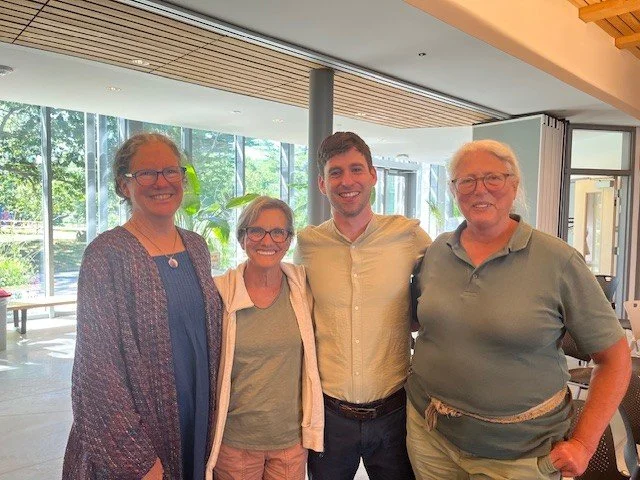
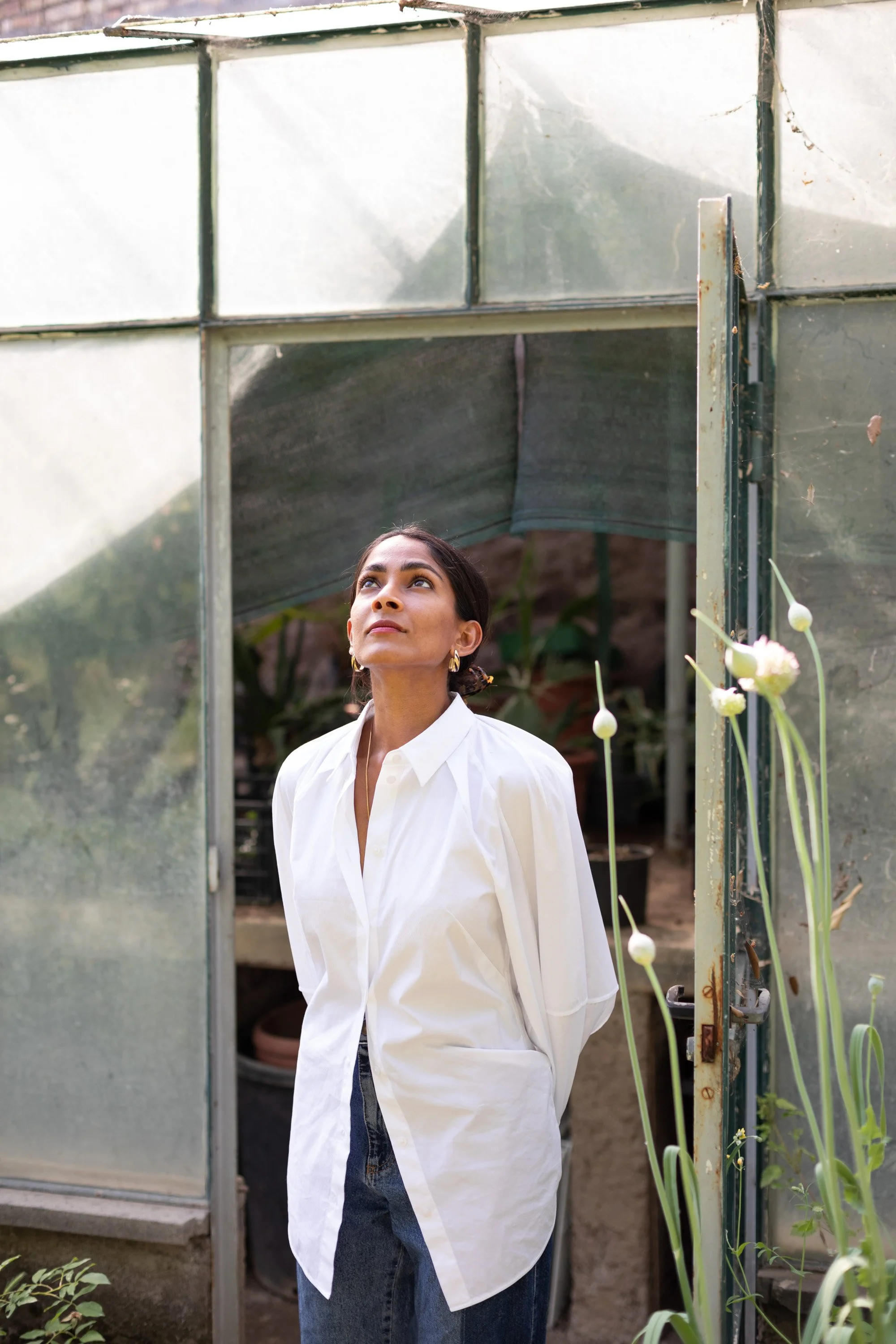
Korman was the rare COA student who arrived knowing exactly what he wanted to study. Hoping to become a landscape architect, he began working with professor Isabelle Mancinelli, who introduced him to gardens around the island. While gardening with COA Head Gardener Barbara Meyers ’89 for his work study, Korman grew interested in the Sunken Garden on campus. His research led him to the Beatrix Ferrand Society, a local nonprofit where he began volunteering, and whose president, Scott Koniecko, he’s kept in touch with. At one of their recent meetings, Korman gifted Scott a book by his boss, Tom Stuart-Smith. Not long afterwards, Scott emailed to say he was interested in giving Stuart-Smith the Beatrix Ferrand Achievement Award, and Korman, who was elated, began making arrangements for the trip. He reached out to COA, suggesting to have his boss give a talk on campus. “It was easy to make happen,” he told me, “because I had so many connections.”
Community played an important role also for Zuri de Souza ’14, now an independent chef and writer based in Marseille. What she remembers most from COA, “besides the academic nourishment” was spending long hours, like Korman, gardening with Barbara Meyers, learning about permaculture at Zocalo, and hiking with her host family.
Davis Scholars continue to engage with the Mount Desert Island community, both on the personal level and on the professional one. They have interned at the Jackson Laboratory in Bar Harbor and the MDI Biological Laboratory. They have worked on river herring restoration, research, and management in the Gulf of Maine and conducted energy audits as part of COA’s energy outreach program, launched in the summer of 2023.
Some Davis Scholars, like Korman, keep finding, and creating, reasons to come back to the island. “I have more of a community on MDI,” he told me, “than in my hometown.” Some of us love it so much, we find reasons to stay.
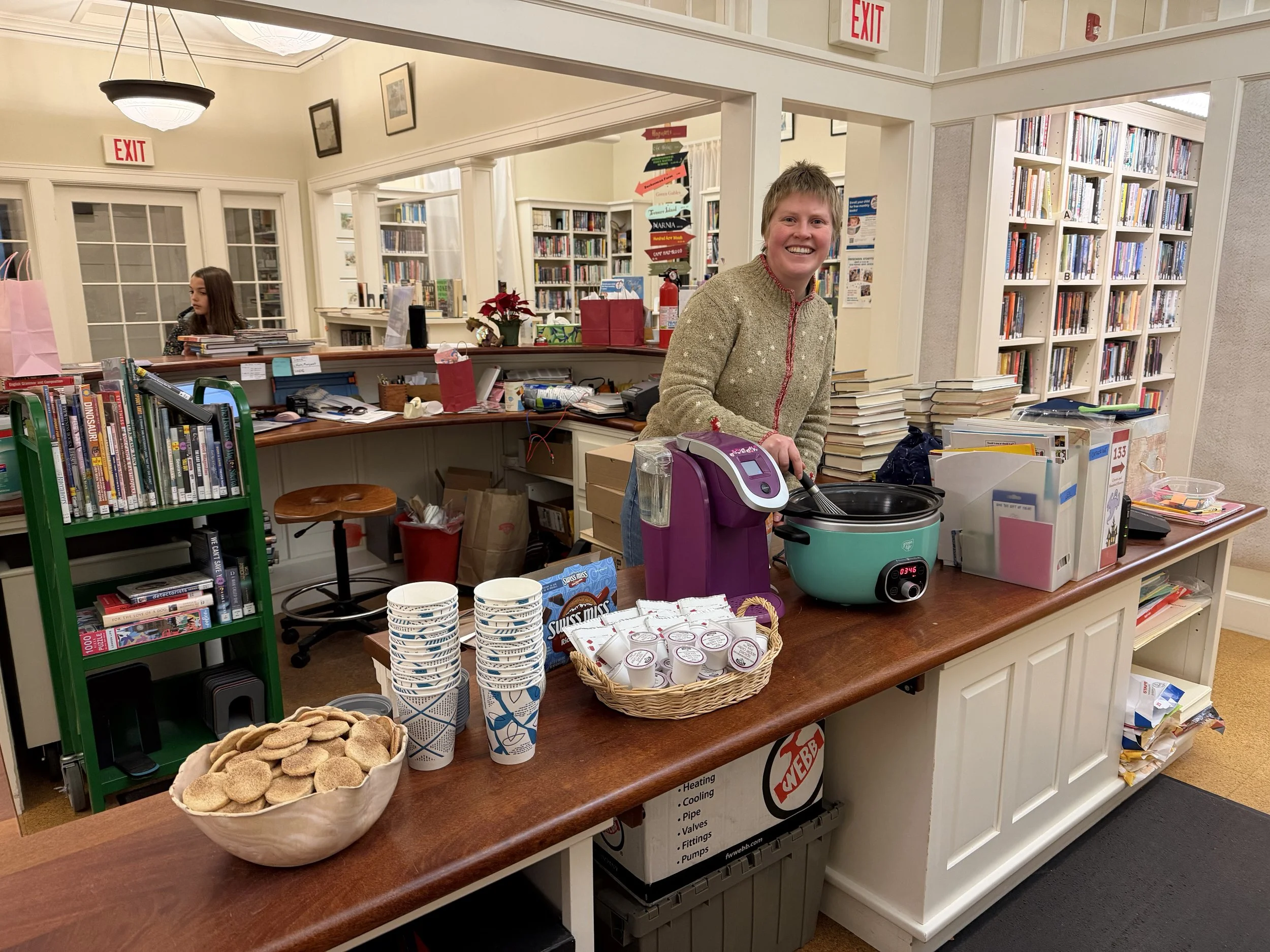
Sadie Cooley ’22 now works as an archive specialist at the Friend Memorial Library in Brooklin, on the Blue Hill Peninsula. “Sadie came to Maine from New México to attend College of the Atlantic,” the library’s website reads, “and has never left.” Devina Iyer ’16 came to COA from India, where she lived in an urban environment without much access to nature. “I’d never felt more safe than I have here,” she told me. After graduating, Devina moved to nearby Trenton with her partner, a fellow COA graduate, and opened both a dog training and a bookkeeping business— “something to do when it’s nice outside,” she told me, “and something to do when it’s not nice outside.” She has since tapered both down and now works in cyber security while pursuing a master’s in the same field. “I genuinely love it here,” she told me. “I think Maine is my place.”
It has become mine, too. Like Iyer and Bedard-Gautrais, I married a fellow COA graduate; like Korman and de Souza, I garden; like Cooley, I work at a local library. But most of the time, I do what I would have anywhere, which is write, only with views I would have found nowhere else.
While still at COA, I was sometimes asked how I ended up such a long way from home. This question came back to me when, in response to my closed opener, Would you have come to COA if it weren’t for the Davis Scholarship? Korman said, No way. The words struck me because the Davis Scholarship was, for so many of us, the way. I wouldn’t have ended up here without it. I wouldn’t have gotten to stay. I wouldn’t have gotten to say, as I now do in response to the question, that I am home.