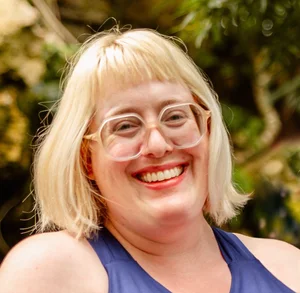
A rich picture of Suzanne Morse
Compiled and edited by Ana María Zabala ’20 and Rayna Joyce ’20
Contributors: Gillian Lalime ’19, Heather Albert-Knopp ’99, Emily Fetter ’24, and Lilia Machado ’25
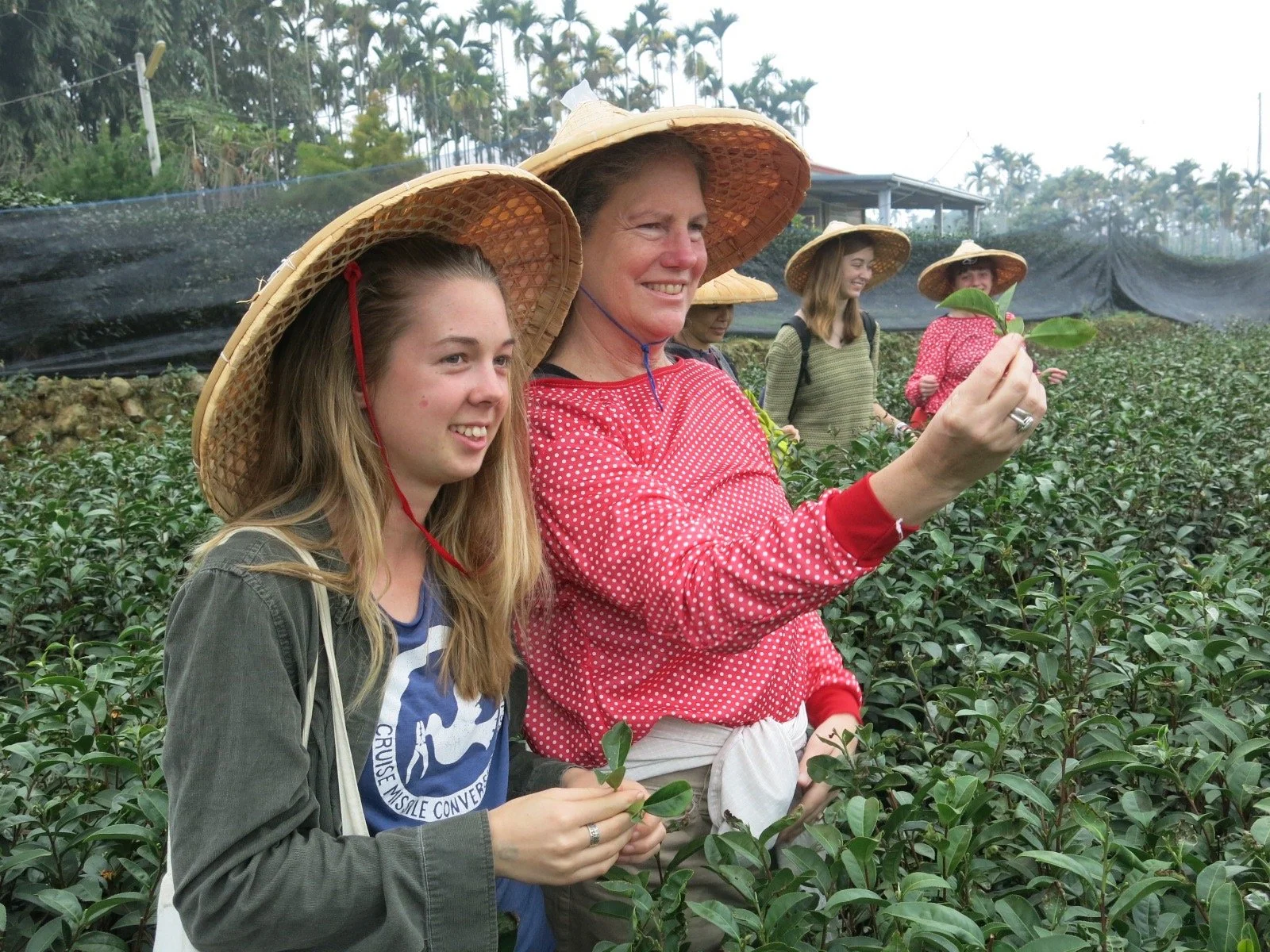
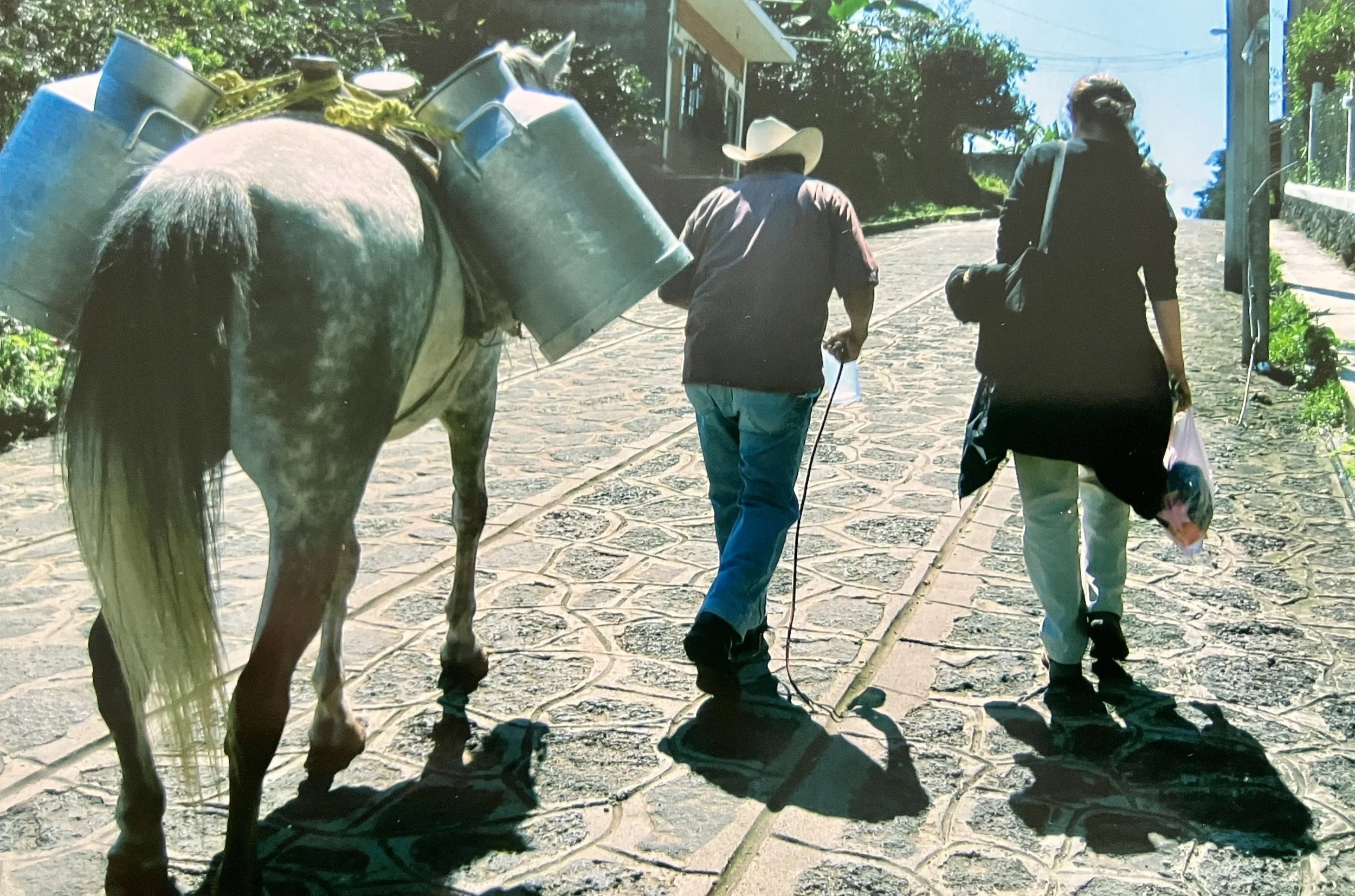
“If I could draw a rich picture of [Rachel Carson Chair in Human Ecology] Suzanne Morse, some elements it would include are: The Community Organic Garden. Norway. Strawberry jam. México. Taiwan. Common Ground Fair. Seeds. Craniosacral therapy. Tree House. California,” writes Gillian Lalime ’19. As we compile the reflections of some of the students who hold Suzanne Morse dear, Gillian reminds us of Suzanne’s Agroecology course, in which we were introduced to the method of creating a “rich picture.” A rich picture is a diagram that identifies and visually represents concepts and components of a system and connects them to one another. It shows different relationships, feedback loops, and interactions, resulting in a complex and tangled web of different perspectives and elements. It is human ecology in a visual form; it embraces complexity, nuance, and context. It seems fitting to take this concept Suzanne taught us and use it to create a portrait of her, one of the most human-ecological professors, and humans, we have come to know.
A rich picture begins with an origin, a place, a person, an initial concept. When it is finished there is no clear beginning or end because ultimately all of its elements are interconnected. It seems appropriate to begin drawing Suzanne’s rich picture with a seed because it is a starting point of life, the foundation of the food system, and the theme of a course that Suzanne loved to teach.
For some of us, sharing seeds became an ongoing expression of friendship, and saving them and reproducing them is a way to carry with us, and keep alive, the relationships woven into our time at COA. Ana María Zabala ’20 writes, “Before Christmas Eve I planted some bean seeds my dear friend Rayna [Joyce ’20] gave me back in 2018, when we lived together in one of the houses on Norris Street. She brought them from a market in Spain where she’d been studying in COA’s Sidra y Queso course. I’ve been reproducing them for the last few years. In this growing cycle, they sprouted right as the new year arrived.”
Ana María continues, “Whenever I think of seeds, I think of Suzanne Morse and her class on seeds. This was one of the most human-ecological classes I took during my time at COA. With Suzanne, I learned that we raise plants and they raise us. I learned to view the world from different human and more-than-human perspectives. I learned about the origin of edible plants, and how the movement of seeds across the globe has been shaped by histories of colonial domination and imperialism; how these magical beads can hold so much power because they are the basis of our food systems, and those corporations who want control over territories and people seek it by privatizing seeds.”
Suzanne is a mentor to each of us in different ways, but the common thread weaving our memories of her together is her ability to push us beyond comfort and ease to the place where true growth and change occurs. “I transferred into COA, which is to say I jumped on a running treadmill,” says Emily Fetter ’24. “I was drawn to this school for the ability to learn more about growing food, and Suzanne became one of the many flames that lit my way as I navigated my new environment like a moth. I struggled a lot during my time at COA, with my own relationship with education, personal events pertaining to my faraway family, and with the growing pains of my own constant becoming. Suzanne was, and still is, a warm invitation into the world of growing food and for showing up as my authentic self.”
Heather Albert-Knopp ’99 shares, “From the very first time I met her (when she, out of the blue, handed me a stack of photocopying to do), Suzanne has been a mentor who challenged me to push myself: from digging out every bit of sow thistle in a corner of the Community Garden until those white rubbery roots invaded my dreams, to taking an unplanned term abroad in the Yucatán, from thinking more critically and encouraging me to (tearfully) scrap my nearly-done senior project report and start over with a more original idea, to finding nuance and gray areas in just about every situation by gleaning new perspectives from those complexities and uncertainties.”
“Suzanne Morse wants to be your friend, and then your teacher,” writes Lilia Machado ’25. “Befriend her, and be ready to grow.”
Another portion of our rich picture of Suzanne is dedicated to physical spaces, the ones she created for her students and the ones she shared so generously and experientially with us. Biking through Tainan, Taiwan. A COA van driving through the blueberry barrens on the way to a farm. A booth in the dining hall at lunchtime. Her own home. The organic seed conference in Oregon. Beech Hill Farm. According to Lilia, “Suzanne’s teachings occurred in glass jars bubbling with brine, between rows of overwintered Brussels sprouts, peering through koji spore incubators, and inside a greenhouse that no longer stands on COA’s campus. Learning from Suzanne, I came to understand that the origins of my curiosity and the stretching of my patience are the rigorous fibers that shape how she teaches, and how to learn through relationships.”
Curiosity is a word that many of us used in describing Suzanne. It is one of the other threads that make up her rich picture. Gillian recalls, “Suzanne uses everyday conversation as fodder to understand the complex relationships people have to land and community. Suzanne employs the same methods of observation, curiosity, and critical thinking that she guides students to use.” As Rayna remembers, “Studying in Taiwan with Suzanne and professor Bonnie Tai, they introduced us to the concept of compassionate curiosity, which has been a transformative lens for me to look through. I think Suzanne taught us all with compassionate curiosity, and by demonstrating it as a way of being and learning succeeded in passing it along.” Ana María reflects how “Suzanne always asked curious questions. She’s a scientist in the freest of ways; she never settled for one viewpoint or superficial insight, reminding us there are always rules in the workings of the world but also exceptions depending on context. She always valued the specific experiences of students and sparked dialogue among us. She was open to learning from us as much as we learned from her. She’s brilliant in the most humble way, always in awe of the world and others, always valuing what they had to teach her as well.”
With these words, we paint a rich picture of an exceptional scientist, gardener, fermenter, seed saver, mentor, and professor who has left a lasting imprint on her students and the COA community. We end this collage of memories with a compilation of our gratitudes:
Thank you, Suzanne, for being my advisor, mentor, and teacher. For always welcoming me into your home with arms open and full of veggies from your garden with which we made dinners while discussing the state of the world and our hopes and dreams. Thank you for accompanying me throughout my time at COA, during which I learned to look at the earth and its plants, food, peoples, and cultures with eyes of infinite compassionate curiosity and wonder while at the same time being critical and analytical, holding the world’s injustices and cruelty in one hand while holding its beauty and possibilities in the other. Thank you for encouraging, as Arundhati Roy would say, my seditious heart. –Ana María
Thank you, Suzanne, for being a bright flame! –Emily
Thank you, Suzanne, for not shying away from the most confounding questions and for caring so much about COA and this community. –Heather