A canvas of dynamic settings—Know Hope: The Abstract and the Very Real
Award-winning documentary by Omer Shamir ’16 hits the road
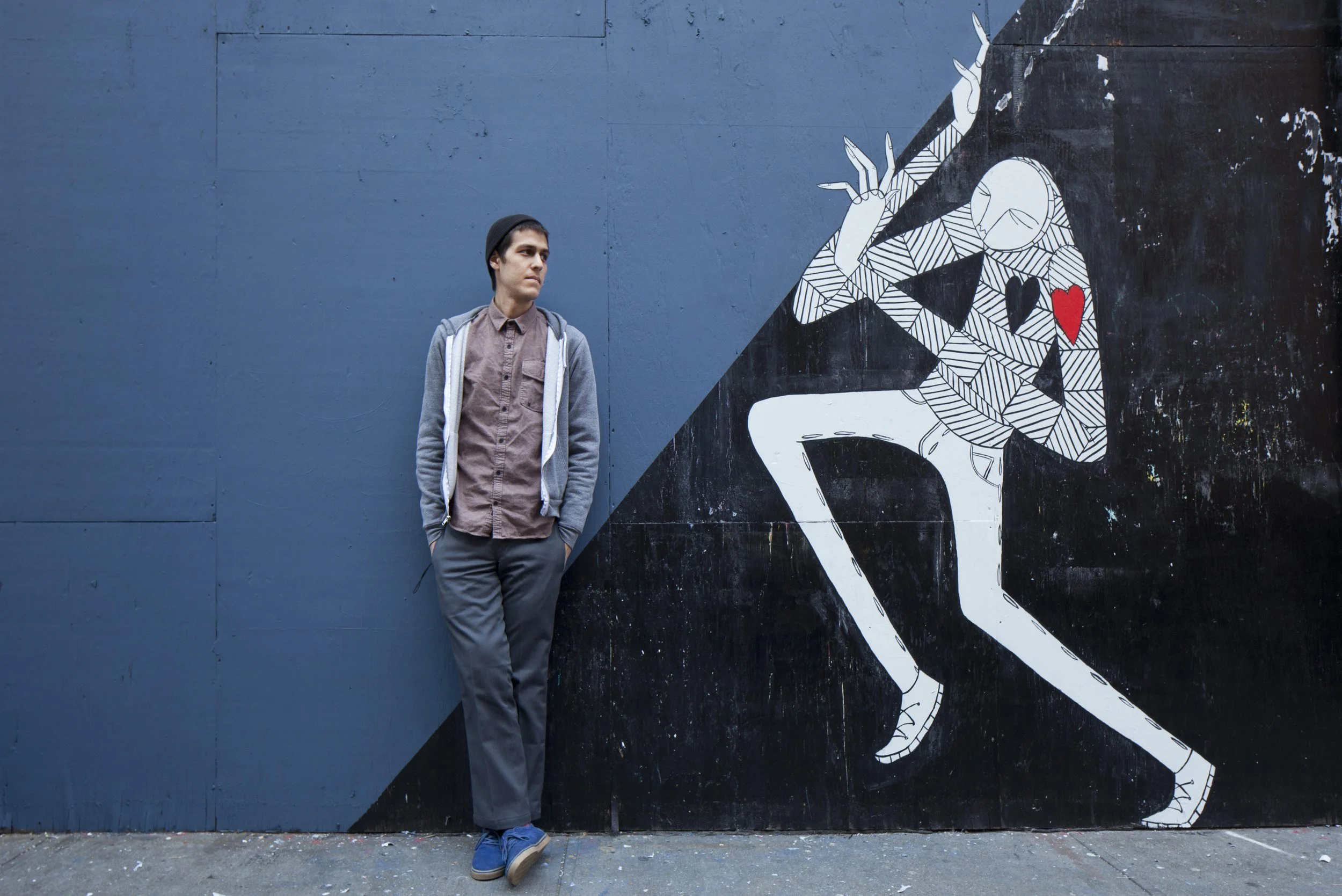
Addam in NYC, Stamped, Mural March 2012
By Dan Mahoney
For the average city dweller, navigating crowded streets and public transportation systems is often a blur of utility. They move at times through the urban environment like ghosts, eyes fixed on the pavement or buried in phones. But for street artist Addam Yekutieli (known as Know Hope), the city is a canvas of dynamic settings, where small, quiet disruptions demand we stop, breathe, and look. The award winning documentary, Know Hope: The Abstract and the Very Real—directed by Omer Shamir ’16—explores themes of borders, displacement, trauma, collective memory, and the legacies of colonialism.
This past fall I met with Shamir, Yekutieli, and—in a happy coincidence—COA alum Rosa de Jong ’17 at Risbo, a cool neighborhood cafe in Brooklyn. The four of us shared food, talked about the upcoming premier of the documentary, and traded stories from the past decade.
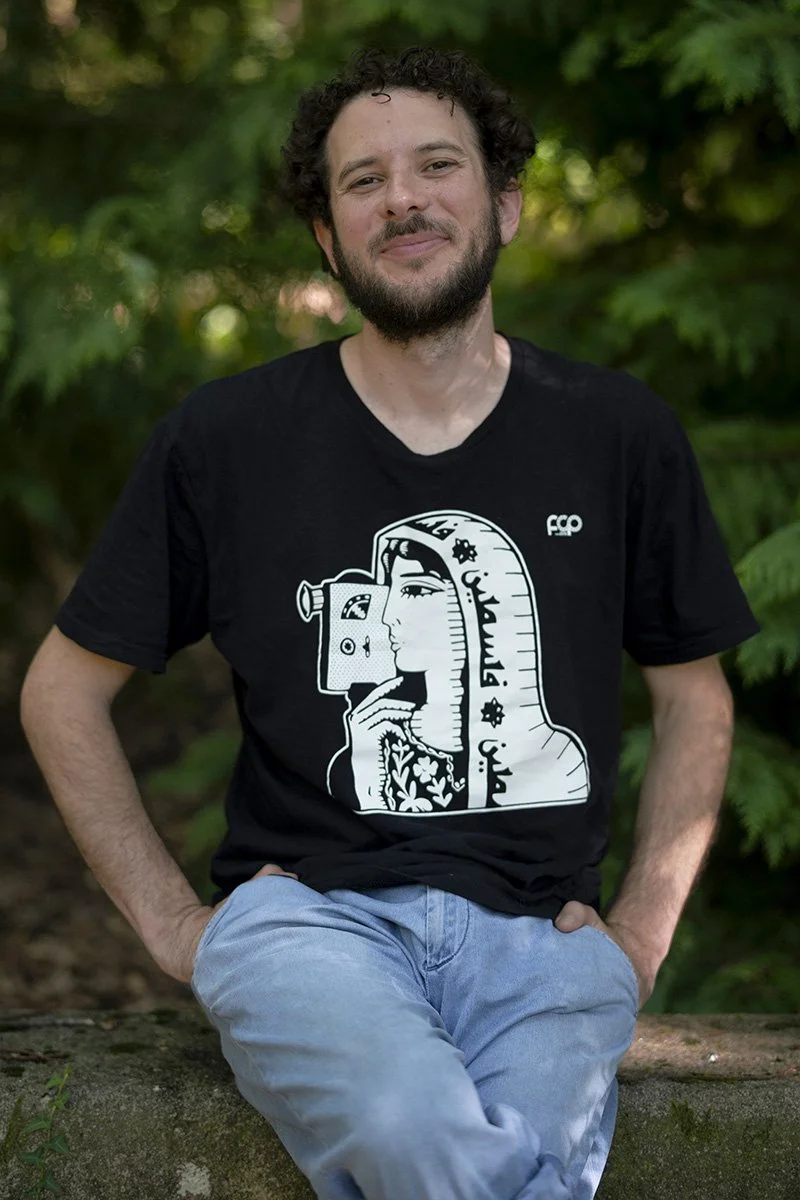
Omer Shamir ’16
From COA to Butte-Chaumont
My earliest encounter with Shamir was in a fiction writing class I taught at COA called Fail Better. The first thing that struck me was his sense of humor, the second was his moxie. It wasn’t that Shamir’s writing wasn’t strong—it was—but that he had more confidence than any 20 year old should have.
The moxie showed up again when Shamir and I were catching up before the others arrived at Risbo. After graduating from COA, Shamir returned to Israel and continued, among other things, working for Palestinian rights and social justice. While there, he met and fell in love with a graduate student who was planning to get her graduate degree in Paris. Shamir went with her. When the relationship fell apart, Shamir decided he could no longer in good conscience return to Israel.
“I’m very much in the Palestinian community in Paris and a lot of what I hear is, It’s great, you moved here. You decolonized the land. You’re doing the right thing. But when I talk to my friends in Palestine—like my old friend Sami who is in the film—they tell me that I’m abandoning them… That I’m leaving Palestinians on the land vulnerable to settler attacks.” Yekutieli, who has just arrived at the cafe, chimes in, “Yeah, leaving the land is like a green light for settlers to do whatever they want.”
Know Hope
A scene from the film shot from across a busy intersection depicts a temporary construction wall where someone has written in red spray paint the word “revenge” in Hebrew. Yekutieli enters from frame right and, with red spray paint, creates a thought where once there was only a stone. After Yekutieli’s exit, the wall reads, “Revenge will not bring back the dead.”
Know Hope’s work is unmistakable. Using a mix of weathered paper, ink, and poetic text, his signature long-limbed characters and iconography of hearts, birds, and fences have become staples of the urban landscape in Tel Aviv and other cities around the world. One thing that Yekutieli has modified over the years is the type of work that he puts on walls. “I used to do these longer written pieces but I became dissatisfied with that work… I felt that it dictated the relationship between myself and the viewer. It put in place this hierarchy of, I’m the spectator and now I’m looking at an artwork painted by an artist. There’s something very limiting in that type of interaction.”
Yekutieli has always been interested in the physical matter of the city rather than just artwork on the street. “Like seeing a flickering streetlight or a bench and then developing all these stories from the physical world. Hypothetical situations. That’s when I went into writing more open-ended texts on the streets. It allowed the viewer to inhabit that same type of process… It stripped me away from being the author of the situation and more of just adding an element to a dynamic setting.”
A striking feature of Know Hope is that we hear the voice of the artist. Yekutieli’s voiceovers serve as an entry point into his work and the project. The film and its subject combine to form a master class of what art and resistance look like at a time when the Israeli military is committing a genocide in Gaza.
On the day before the day after, as the tears and blood absorb into the ground, making it damp and muddy, so much so that our footsteps show, making small foot-sized holes in it. Impressions like testaments, like testimonies. It’s unclear whose footsteps belong to whom as much as it’s unclear which ones are going where. One could look at these moments now frozen in time and ask, Where were they all going? Eventually, maybe after our time, big rain will come down, pounding the ground with the weight of grief and unanswered pain. Washing away all the footsteps. On the day after the day after, what story will this tell?
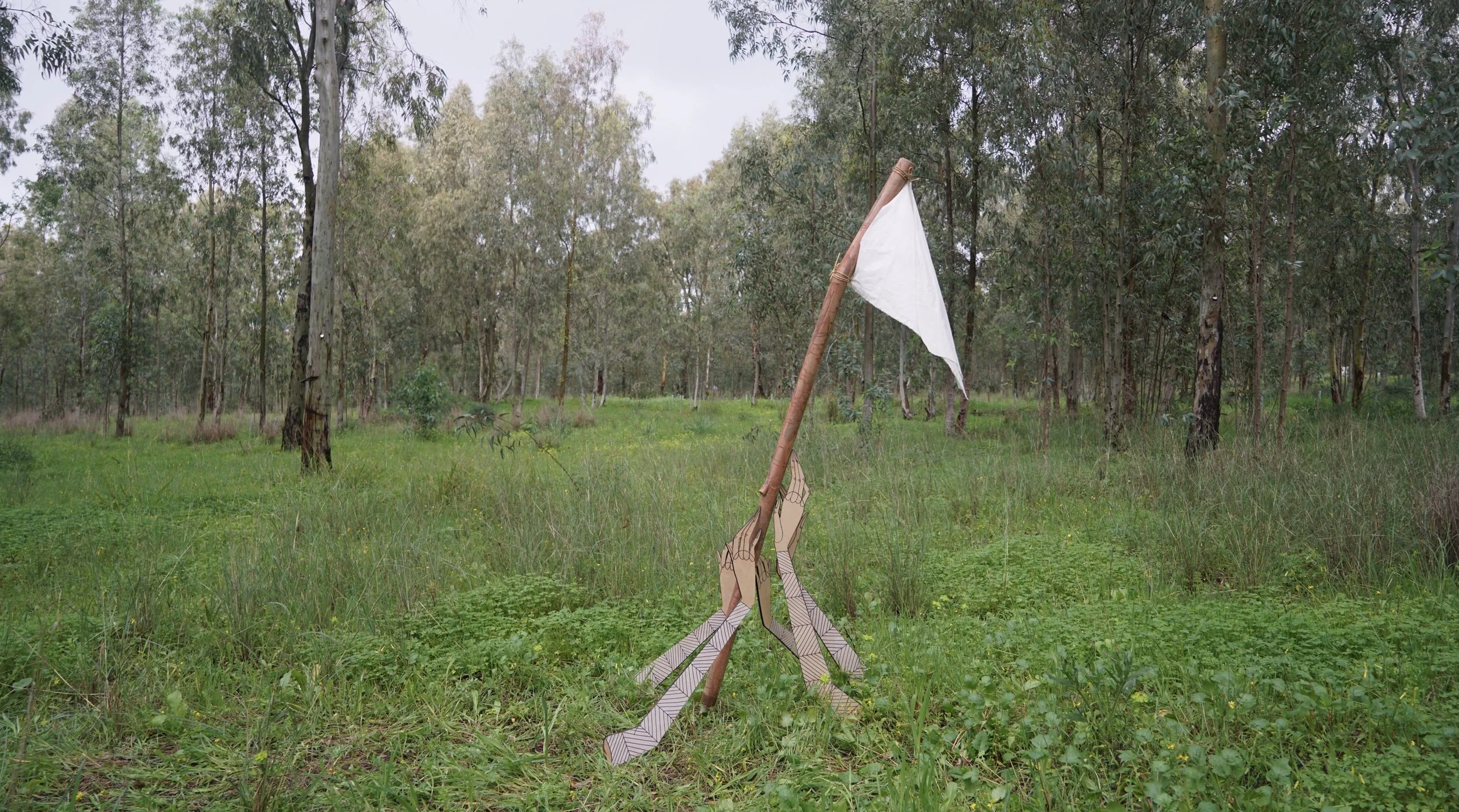
As we hear this voiceover, we see Yekutieli building a sculpture: many arms sprouting from the ground to hold up a simple white flag.
The abstract and the very real
Shamir’s cinematography is intentionally tactile. He avoids the flashy, fast-paced editing often seen in “street art” films. He opts for long takes, natural lighting, and including his voice as a part of the action. For me, this is key, this listening in on Shamir and Yekutieli interacting; at one point Shamir even tells Yekutieli, Take off your hat. Yekutieli sort of rolls his eyes and does what the director says. There is real warmth between these two which allows for the viewer to see a side of creative relationships usually hidden.
The film’s premier in New York was held at the Judson Church. There were a lot of people and a lot of love in the house. It was my first time being in the Judson Church and I was struck by the warmth and spirit of the folks working there. When I looked around I saw lovely old stained glass windows from the 19th century and a new set of painted inserts featuring iconic figures in African American literature, queer liberation, and intersectional activism. Featured in the windows were: St. Pauli Murray, St. James Baldwin, St. bell hooks, St. Marsha P. Johnson, St. Bayard Rustin, and St. Octavia Butler. I could think of no better place and no better company to premier Know Hope: The Abstract and the Very Real.