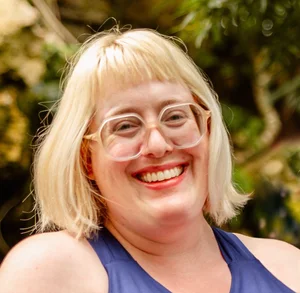
Anna Ialeggio: Experimentation and spaciousness
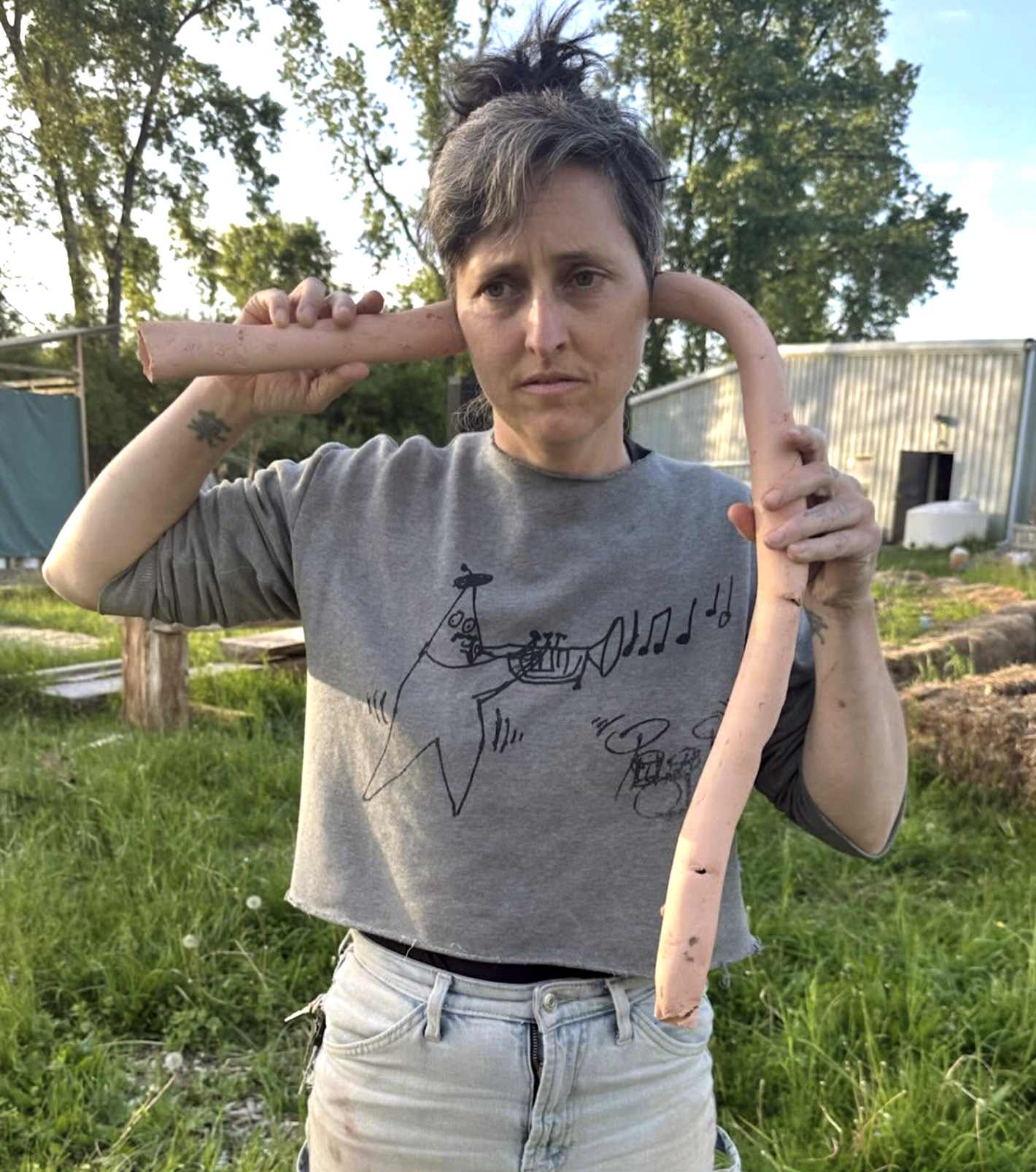
By Jeremy Powers ’24
Anna Ialeggio talks about teaching the way some explorers talk about entering the unknown. There’s only a rough map, and it demands trust in what will emerge along the way. Ialeggio is College of the Atlantic’s newest faculty member in ceramics and art, and is excited to join a community that is as focused on the space between the lines as they are.
“What excites me most is the fact that teaching here is approached as something that is inherently experimental—ultimately, where we’re going together is a surprise,” says Ialeggio. “I love being an educator because I love learning. I probably learn as much or more than my students do in every class.”
As such, they resonate deeply with COA’s experiential and collaborative approach to learning. Ialeggio is particularly energized by how site-specific teaching feels at the college. “I was attracted to how much interplay there is with fieldwork, field stations, the forests and islands and farms—everything feels connected to where we are.” They’re equally enthusiastic about the culture of collaboration they have encountered since arriving. “I’ve already seen so many interesting transdisciplinary experiments between my colleagues, like a geologist and an art historian teaching together. Amazing.”
An appreciation for the space between disciplines lies at the root of Ialeggio’s identity as an artist. They say that their practice “began in artist and activist collectives, usually anonymous: big rhizomatic networks of people that would produce a fruiting body every once in a while, something big and spectacular.” One such collective was called the Miss Rockaway Armada, with whom they traveled down the Mississippi on a floating theater made of trash. When Ialeggio wasn’t focusing on collective art, they were working seasonally in conservation, spending time as a site steward, ridgerunner, trail crew member, and backcountry guide. They started thinking about what art and the wilderness have to do with each other, and say that these experiences turned them into “someone who makes art and teaches from a place of curiosity about how people relate to where they are, and how we inhabit and build the worlds in which we exist.”
This synthesis of material practice, ecology, and experimentation is reflected in their practice as an educator. This winter Ialeggio taught an advanced ceramics studio and a hybrid studio/seminar titled Sci-Fi & Sculpture: World-Building as Art Practice. In the spring, they’re teaching an eco-sculpture course where students work with materials that “grow or decay or erode in some way.” Looking ahead, Ialeggio is eager to develop courses on natural pigments, kiln building, advanced 3D studio practice, and a ceramics class that will be focused entirely on transforming local granite into a full line of ceramic glazes. “I do have a bit of a thing for hyper-local art materials,” Ialeggio says, laughing.
In a moment when higher education feels uncertain in many ways, Ialeggio is clear about why they’re grateful to be at COA. “This is a particularly complicated moment in time,” they say, “but a place like this—small, transdisciplinary, experimental—can be incredibly nimble.” After a moment, Ialeggio adds, “At other institutions, some of my weirder ideas met a bit of resistance: You want to bring your sculpture class out on a bunch of sailboats? I don’t know… Then I interviewed here and everyone was like, Well, duh—we already do that. I’m really, really excited about this place.”