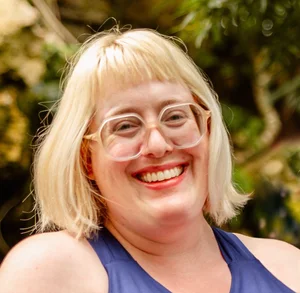
Victoria Edwards: Trust and collaboration
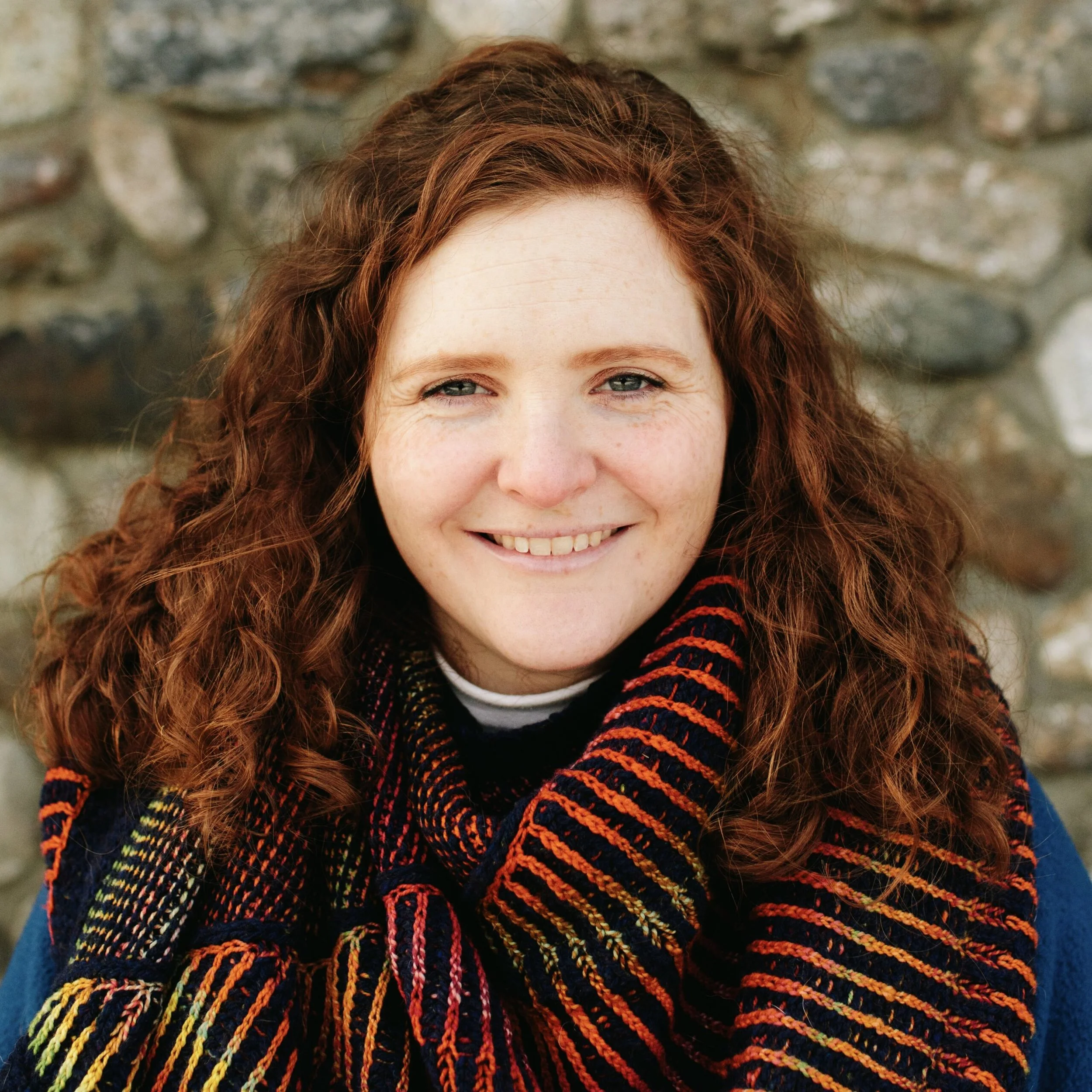
By Jeremy Powers ’24
An engineer by trade and an educator at heart, Victoria Edwards has arrived on the rocky coast of Maine via a winding road full of twists and turns. Edwards, College of the Atlantic’s new interdisciplinary computing professor, comes to Bar Harbor with a resume that resists easy categorization and a conviction that the most interesting answers live somewhere in the spaces between inquiry and uncertainty.
“I’m really excited about the interdisciplinary nature and the general collegiality of the community,” she says, smiling. “It’s really fun to be part of a community that is different from my traditional background.”
She describes her approach to the classroom as a shared intellectual project that centers around trust. “To have a successful classroom, you need to build a two-way street. You need to trust the students and the students need to trust you as a professor,” she says. “Higher education offers a real opportunity to help nurture and foster the growth and development of young people from childhood into adulthood through challenging, interdisciplinary topics like computer science.”
Edwards’ first class at COA focused on the fundamentals of computational thinking, with students learning to use computational skills and techniques to build tools for other disciplines. Among the goals of the course, she says, is to create a “computational community,” one that treats learning as a collaborative endeavor rather than a solitary pursuit.
Looking ahead, Edwards is excited to revamp the school’s computer science offerings, which she can do thanks to a recent grant from the Maine Space Grant Consortium, a program centered on funding STEM courses. “The focus will be computer science instruction, but we’re also going to use visual media and music to explore a variety of different computer science applications, like live programming, where technical coding is performed live to produce unique sounds, visuals, and music.”
Edwards began her career by studying computer science and mathematics at Colby College. The trajectory soon widened—a master’s degree in robotics at the University of Michigan led to several years in the US Naval Research Laboratory, where she examined how to verify swarm systems—networks of autonomous agents whose collective behavior can be difficult to predict. She later completed a PhD in mechanical engineering at the University of Pennsylvania.
Her habit of synthesizing different ideas and ways of thinking made COA—an institution organized around interdisciplinary study rather than traditional departments—an unexpected but fitting destination. “I’m an engineer by training, and COA is not a cut-and-dry engineering school,” she laughs. But during her interviews at the college, she found herself invigorated by questions from faculty and students outside her familiar technical sphere. “I remember getting questions about the legalities of robotic systems, about sensing rates, and it was really refreshing to be in a place that really encourages the community to address and work through different perspectives and biases to build better, stronger tools.”